Monica Shannon
In early July, Lion’s Bay Search and Rescue, a local volunteer team serving communities along Howe Sound in BC, released a statement emphasizing why their and other SAR teams’ work is done free of charge.
Alongside operational practicalities is the fundamental recognition of search and rescue “as a public-safety service.” They argue that we “generally do not send someone a bill when firefighters respond to a house fire because they left a pan on the stove” or “invoice someone for a car crash because they made a driving error.” This work is done to save lives, and these teams recognize that profit has no place in decisions about public safety.
However, private business interests are seeking to profit from the increasingly lucrative field of emergency response.
Canadian summers are increasingly marked not by road trips and beach days, but by disasters. A month after Lions Bay SAR’s statement, BC was under a state of emergency with over 20,000 people’s lives being uprooted by evacuation orders. The communities of Clinton and most recently Summerland and Peachland have seen almost their entire populations displaced, as have hundreds from the Indigenous Okanagan Band. At time of writing, at least one 80-year-old woman has died due to the fires.
Climate scientists have long predicted worsening catastrophes. Calling them “natural” disasters obfuscates capitalism’s role in ecological destruction in the name of profit through fossil fuel industries, reckless development and extraction schemes, and colonial dispossession. Without sufficient action, these disasters will continue to worsen with increasingly severe consequences for working people.
Even those removed from wildfires face respiratory impacts, particularly people living with asthma, COPD and long COVID. In the aftermath of the 2021 heat dome in BC, the BC Centre for Disease Control identified that heat waves disproportionately kill our most vulnerable including seniors, immigrants, precarious workers, unhoused people and those living in poverty.
Climate-driven disasters are not a new phenomenon, nor is the role of capitalism in both driving them and appropriating responses to such emergencies for profit. Hurricane Katrina, which devastated the Gulf Coast and particularly New Orleans in 2005, was an early example of intensifying human-driven climate disaster. The Bush Administration’s post-Katrina response became infamous for its incompetence and reliance on private firms like Halliburton and Blackwater, notorious for their roles and fortunes made in the Iraq War. Both made billions in profits during the response and longer term reconstruction.
In Canada we have seen similar instances of what Naomi Klein popularly dubbed “disaster capitalism.” In 2017 amidst evacuations of Tsilhqot’in communities during severe wildfires, former BC Liberal Premier Christy Clark marked her last day in office by granting Trekor Metals (formerly Taseko Mines) exploratory permits in Teẑtan Biny, one of the very territories under evacuation. After almost a decade of legal battles, Trekor’s planned New Prosperity Mine was defeated and Tsilhqot’in rights upheld in a historic agreement last year.
What we are seeing now is not only profiteering during emergencies, but the monopolization of emergency response itself. Recent reporting by the Globe and Mail documents private equity’s buying up of Canadian services including “disaster restoration firms, medevacs, surgical centres and funeral homes.” The scale of potential profits is enormous: in 2024 alone, the Insurance Bureau of Canada recorded $8.5 billion in climate-driven losses across the country. Meanwhile billions in private capital have been poured into restoration services since 2018.
This is not limited to cleanup and redevelopment services. Through vertical integration, these same interests that bought out medevac services very likely “will also control the clinic or surgical centre the patient arrives at,” and even funeral services if they do not survive.
Missing from this reporting, however, is the fact that none of this should be profit-driven. The current scale of the crisis has made responses historically managed by small family businesses untenable, and the threat of monopolization unacceptable. Direct state-led intervention is required in contemporary disaster management.
To do this we must rethink our priorities.
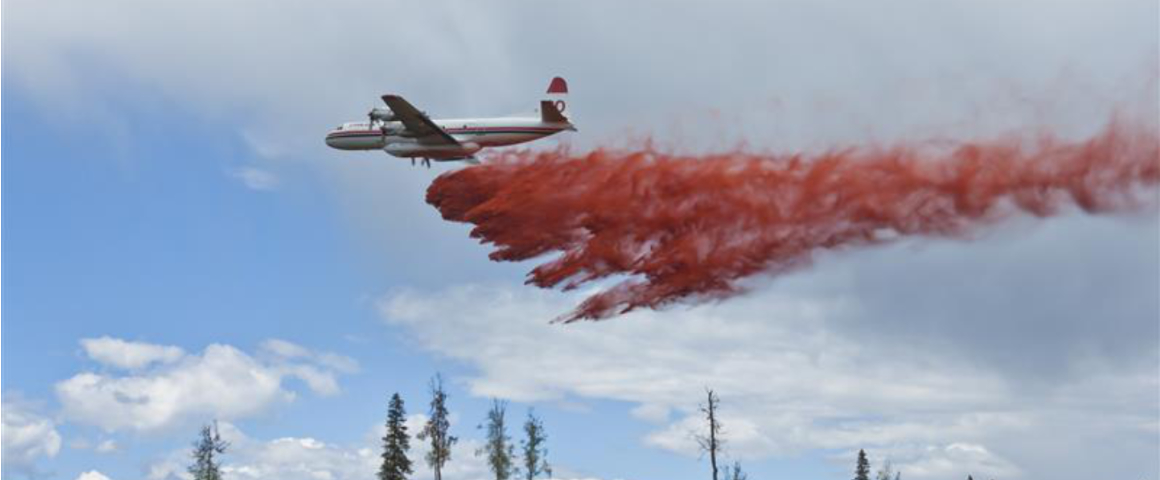
Returning to fires, Canadian wildfire services are among the best in the world, regularly deploying to other countries during times of crisis. Yet as fires grow larger, seasons lengthen and evacuations become more complex, these services remain chronically underfunded. This gap has increasingly been filled through private contracting, with the BC Wildfire Service for example relying on privatized crews, aircraft, and other services to supplement public capacity.
Meanwhile, as the CBC has reported, Okanagan Band residents who lost their homes in the ongoing fires struggled to even secure a hotel room due to coverage issues from BC’s under-resourced Emergency Management and Climate Readiness ministry. The Eby government’s delay in declaring a state of emergency led to elders being forced to sleep in their cars, as hotels could not be requisitioned as appropriate shelters without the declaration.
Firefighters, search and rescue teams, paramedics and emergency coordinators are asked to confront a growing climate emergency while governments devote tens of billions to military procurement. Politicians may defend these expenditures by pointing to so-called “dual use” capabilities, arguing that military hardware can be deployed during domestic emergencies.
However, climate resilience requires civilian infrastructure. Warplanes cannot create firebreaks, conduct prescribed burns, staff evacuation centres, or keep rural ambulances operating. Even transport aircraft are of little use when committed to war games or imperial adventures abroad.
The question is not whether Canada can afford to prepare for a century of fires, floods and extreme heat, but whether public resources will continue to be directed toward militarization and private profit instead of the services that working people rely on in an emergency.
The billions earmarked for war could instead fund expanded wildfire crews, publicly owned air ambulances and medevac services, new water bombers and rescue aircraft, stronger emergency management agencies, and Indigenous-led stewardship practices that have protected these lands since time immemorial.
What we need is disaster management that protects working people from both ecological disasters and the ravages of capitalists seeking to leverage those disasters for private gain.
Support working-class media!
If you found this article useful, please consider donating to People’s Voice or purchasing a subscription so that you get every issue of Canada’s leading socialist publication delivered to your door or inbox!
For over 100 years, we have been 100% reader-supported, with no corporate or government funding.