
PV Saskatchewan Bureau
The Bell AI Fabric data centre project just outside Regina is setting off alarm bells across Saskatchewan, over concerns about its environmental impact. The issue is especially troubling as wildfires and drought are on the horizon for this summer.
Summer is a precious season in the prairies. It’s the season of growth, agricultural development and much needed respite from the long and grueling winters. This has changed in recent years as summers become more volatile due to environmental change.
The summer of 2025 was particularly apocalyptic in Saskatchewan, as northern wildfires blanketed the skies with unbreathable smoke and haze. What was supposed to be a summer of rejuvenation became a harsh reminder of the times that we are living through. Nearly 500 hundred fires ravaged the province last year and burned almost 3 million hectares of northern forest.
Predictably, premier Scott Moe and his Saskatchewan Party government did little to alleviate the devastation. In preparation for this year’s fire season, they have already made two water bombers unavailable for this year, and have used it as an opportunity to pay private contractors to replace the planes.
This comes as some parts of Saskatchewan face nine years of consecutive drought, with areas receiving 25 percent less rainfall last year. This trend is predicted to continue this season.
It is clear the government has no plan in place to respond to the environmental devastation wreaking havoc in the province.
This is not ignorance but a coordinated initiative.
The Sask Party is the political arm of the resource industry. For it to properly respond to continued environmental degradation in Saskatchewan, it would need to come to terms with the political donors that line their pockets.
When it comes to AI data centres, it’s obvious that the Moe and Co. couldn’t care less about the environmental impact. While the deal struck with the Regional Municipality of Sherwood has 16 conditions in place that address some environmental concerns, there are no guarantees or oversights in place to ensure that the conditions are met.
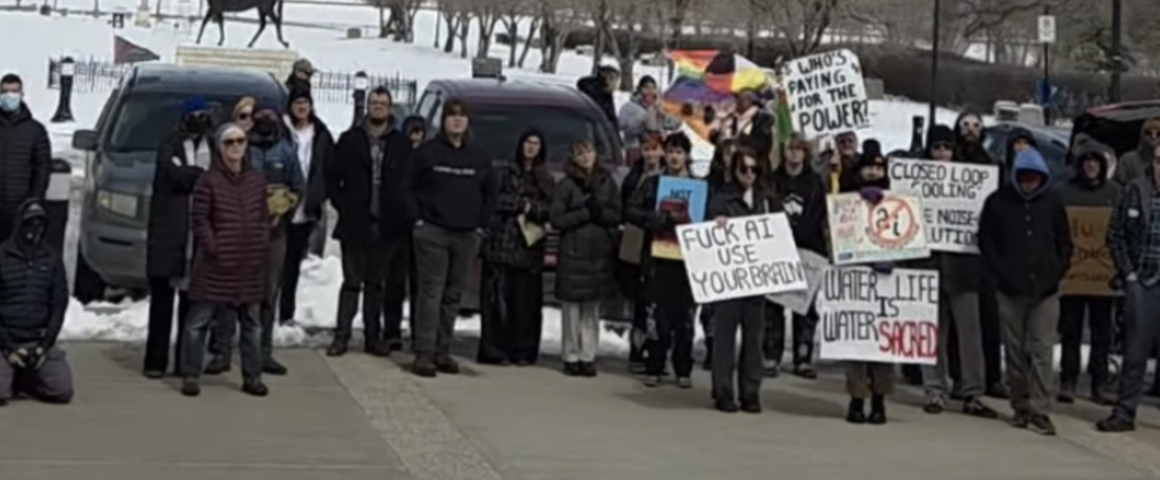
One of the specific concerns relates to water, which AI data centres are gluttonous for. There are different systems that can be used to reduce the amount of water used to cool the data centre but all of them come with some cost. One of these is a closed-circuit cooling system that recycles water through a loop but uses chemicals to regulate and clean the water, which results in chemical runoff. It is alleged that the Bell AI Fabric data centre may use this system, but nothing is confirmed or certain.
The anxiety over water consumption is valid. In a province where everyone is watching its fertile farmland go to dust and its northern forests go to ash, the water needed to run an AI data centre is a luxury we cannot afford.
Almost all of Regina’s drinking water comes from Buffalo Pound Lake, just north of Moose Jaw called. This water will now be diverted to the new data centre, if Bell does not use the closed-circuit method.
In a province where the environmental impacts of resource extraction are highly visible, an AI data centre is low priority. Rather than finding ways to increase capacity to address drought and wildfires, the Sask Party is adding fuel to the fire. Saskatchewan has crumbling infrastructure, little-to-no provincial transportation, high rates of homelessness and a child poverty rate of 27 percent.
It also has a political party that has been in power for 19 years, and which is happy to let it all happen so long as their corporate donors continue to profit.
[Screenshot from video of rally against AI data centre: skdatacentreaccountability, IG]
Support working-class media!
If you found this article useful, please consider donating to People’s Voice or purchasing a subscription so that you get every issue of Canada’s leading socialist publication delivered to your door or inbox!
For over 100 years, we have been 100% reader-supported, with no corporate or government funding.