
By Jack Copple
As the US-Israeli war in Iran continues, countries around the world are starting to feel the effects. Egypt has ordered nightly closures of businesses in Cairo and other areas of the country in an effort to reduce oil demand. The European Union is calling on all member states to shift to a work-from-home model and reduce all non-essential travel. The Australian Financial Review recently reported that there will likely be consumer fuel rationing announced in Australia.
In Canada, the war is primarily impacting consumers at the pump, as gas prices have risen over 40 cents per litre across the country, with some areas seeing even greater increases. In response, Canadian unions including the Canadian Association for Professional Employees and BC General Employees’ Union are echoing the International Energy Agency’s call to shift to fully remote work, to offset oil demands.
The IEA has further advised member countries to significantly reduce recreational air travel, reduce road traveling speeds, and rotate days which individuals may drive based on license plate number, among others actions. Most of these restrictions are focused on lessening consumer demand on oil by reducing individual vehicle travel, to preserve supply for industry. Like early reporting during the COVID pandemic, energy shocks are slowly rippling out across the world, causing damage that is difficult to see coming.
Beyond effects on prices at the pump, the global oil supply shocks could threaten Ontario’s electricity grid infrastructure itself, as a result of changes made by the provincial government since Doug Ford’s 2018 election. Ontario’s energy grid currently relies more on fossil fuel consumption to power its energy grid than it has since shuttering its last coal plant – marking the highest emissions since 2012, and a near total reversal of Ontario’s progress towards an emissions free grid.
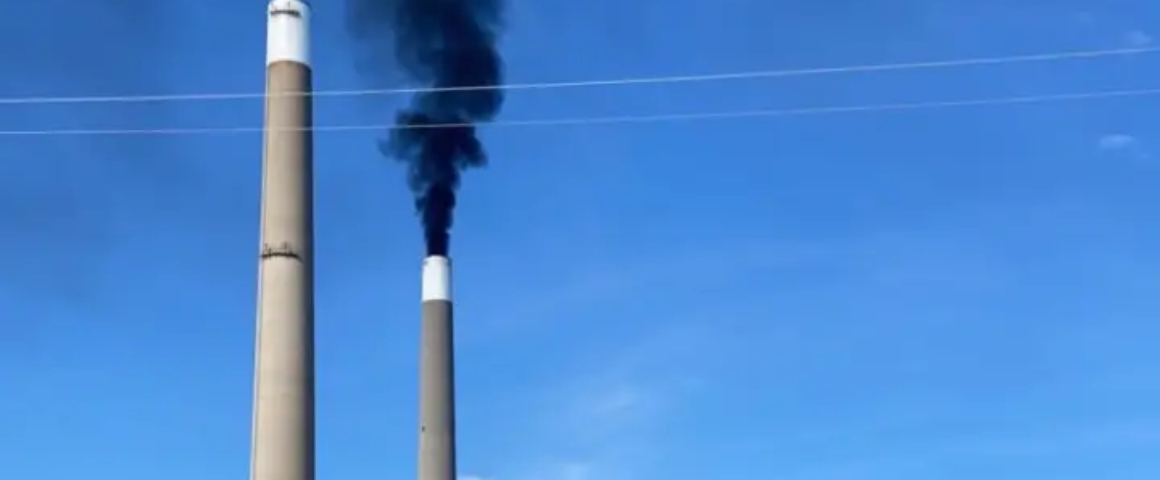
Three-quarters of Ontario’s electricity supply is provided by nuclear power (51 percent) and hydroelectricity (24 percent). But remarkably, oil and, especially, gas burning stations now provide 16 percent of the province’s total electricity generation, a four-fold increase in total output since their 2017 low of 4 percent.
Nominally, increases in the oil and gas mix have been caused by disruptions in nuclear output as a variety of plants are restored and refurbished. However, investigations by the Toronto Star found that gas plants are being used during off-peak times not to bolster, but to replace alternative energy sources on the grid. These changes, implemented by Ford, have seen Ontario’s grid go from 96 percent emission free energy down to 84 percent.
Increasing the fossil fuel mix of the energy grid is something Ford was known to boast of early in his tenure, including after cancelling 758 renewable energy projects shortly after first being elected. Further development of renewables has also stalled during his premiership, as he has shifted focus to nuclear and gas plant generation. He’s taken his anti-renewable rhetoric further in subsequent years, including by banning green projects in certain areas of the province altogether.
But Ontario’s reliance on fossil fuels may get even worse, as the Independent Electricity System Operator (IESO, the crown corporation which manages the province’s electricity market) expects total generation to increase in the near term, as refurbishments at the Pickering generating station take even more nuclear supply offline. Soon, Ontario will see 20 percent of its electricity generated by oil and gas plants, with even greater reliance possible in the future.
These changes to energy mix leave the province susceptible to supply shocks as oil and gas prices shoot up and supply shrinks in the near term. Despite the fact that Canada is a major oil producing nation, 70 percent of Ontario’s oil and gas supply is imported from the Unites States. This major threat to Ontario’s energy sovereignty is about to be tested, as prices shoot up and supply dwindles in the wake of final deliveries from the Middle East.
Environmental advocacy organization Environmental Defence told People’s Voice that Ford’s changes to Ontario’s grid mix have already seen prices rise. “Electricity bill for Ontario ratepayers increased by 29 percent as of November 2025,” since Ford started implementing the changes, and more price rises on their way. “We will likely see additional cost increases in 2026 to reflect the higher operating costs of gas plants that the Ontario government has chosen to increasingly rely on for energy production.”
Those price increases were expected before the closure of the Strait of Hormuz sent oil prices skyward, meaning even larger energy bills in Ontario are likely on the way, with rates remaining high for years to come.
Worse, still, as government policy continues to shift the energy grid mix over to fossil fuels while maintaining such a high level of US imports, it undermines sovereignty and energy security. The US-Israeli war on Iran has shown how dangerous ceding energy sovereignty to US imperialism can be – Ontario would be wise to learn this lesson before it is too late.
Addressing the threat to Ontario’s energy sovereignty requires immediate action. This means removing Ford’s arbitrary ban on renewables, including on solar panel projects on all farmland, which he implemented to appease segments of his climate-denying base.
Beyond that, Ontario must take dramatic steps to democratize its energy production and take steps toward a green transition. This includes nationalizing the energy grid and dramatically reducing reliance on fossil fuels for electricity generation, expanding renewable energy generation, and massively expanding urban and intercity rail and public transportation while eliminating transit fares.
[Photo: Black smoke from oil and gas burning Lennox Generating Station]
Support working-class media!
If you found this article useful, please consider donating to People’s Voice or purchasing a subscription so that you get every issue of Canada’s leading socialist publication delivered to your door or inbox!
For over 100 years, we have been 100% reader-supported, with no corporate or government funding.