PV Regina Bureau
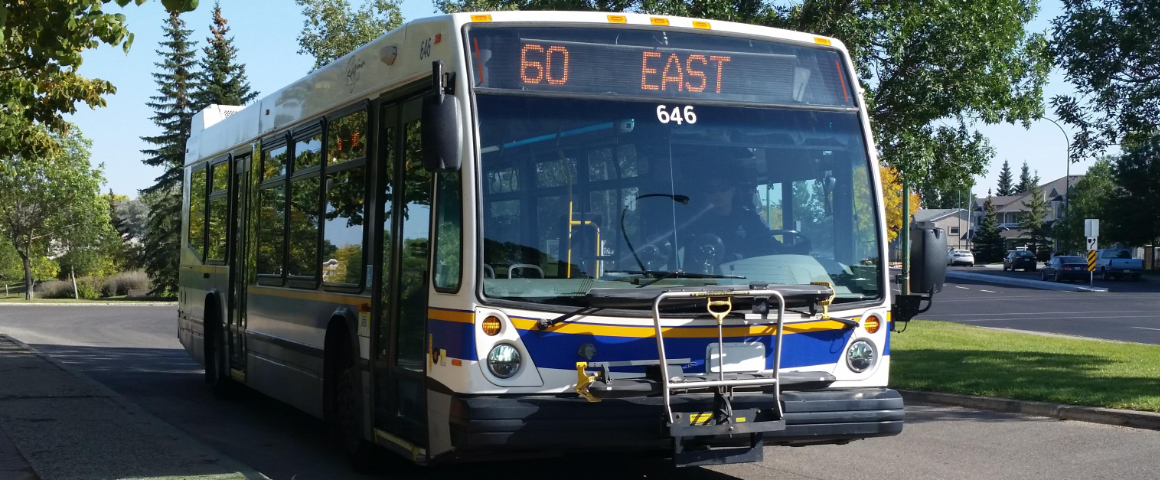
Regina is not a walkable city. If you do not own a personal vehicle, you’re screwed. And while the transit system leaves a lot to be desired, it’s still serviceable, especially for workers and students in the city.
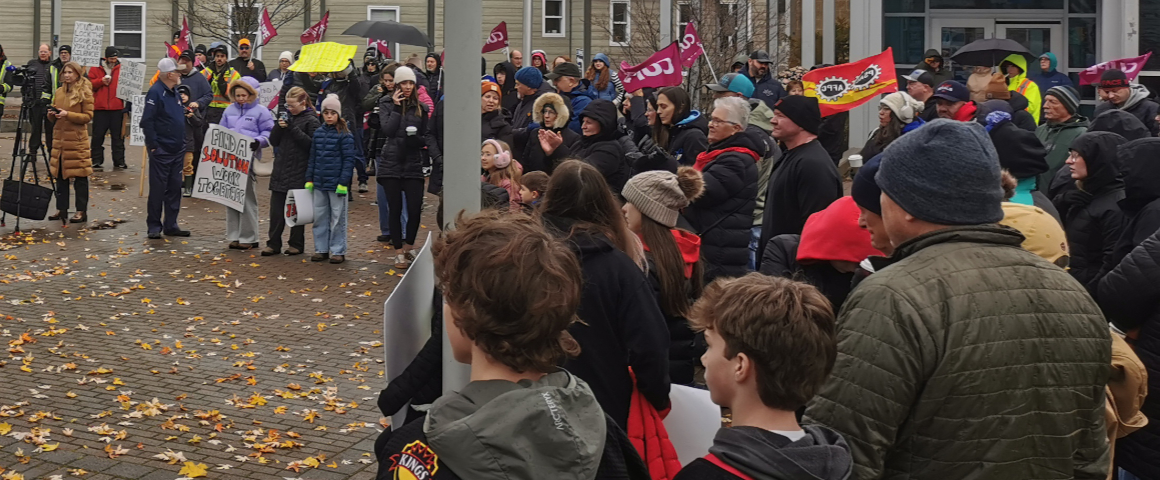
So, it is only reasonable that when the City of Regina decided on November 23 to lock out 380 transit drivers, members of Amalgamated Transit Union (ATU) Local 588, working people felt decisively screwed over by City Council.
This is the first ever lockout of transit workers in the history of Regina.
For two years, ATU 588 had been bargaining with the City for a new collective agreement. Due to growing tension and lack of movement at the bargaining table, the union announced on November 21 that its members would no longer work voluntary overtime. In response, the City claimed it could not operate safe or reliable services without overtime workers, and locked out the union.
When ATU 588 members showed up for work on the morning of November 23, they were met with chains and locks on the door.
Despite hiding behind the public relations cover of “safety and reliability,” Regina City Council couldn’t escape from public vitriol, which escalated quickly. Many people called for Mayor Chad Bachynski to intervene and end the lockout.
In an email response, the Mayor stated that “City Council does not negotiate collective agreements [which] are carried out by City Administration through the established collective agreement,” dismissing any influence over the current situation. ATU National President John Di Nino, however, pointed the finger directly at Bachynski and City Council for allowing the Transportation Agency to lock out transit workers, and demanded that they “step in and make some reasonable decisions!”
Di Nino also stated that while ATU 588 is willing to return to the table, “status quo will not be acceptable” and the City of Regina would need to make concessions in order to bring this bargaining round to a close.
Local 588 Vice President Pat Nichol made it very clear that under the current collective agreement overtime is voluntary, that the union gave 48-hours’ notice that it would be pursuing job action, and that members would not take overtime as a result. The City’s decision to lock out workers over what some would consider a soft approach to job action, was without a doubt retaliatory, and quite frankly, foolish.
Newly elected Saskatchewan Federation of Labour President Marilynne MacFarlane urged the City of Regina to return to the table, and in a strong rebuke stated that “at the end of the day [transit workers] don’t work for politicians – politicians work for the people,” highlighting the fact that ATU 588 members are not only transit workers but constituents in the city.
A social worker for the province noted that clients in Regina who rely on public transit for medical appointments were left without any other option. The City kept paratransit operational, but residents with disabilities would need to book transportation a week in advance and were unable to use the service after 5 pm. “Transit is already bad,” noted the social worker. “Clients on Saskatchewan Income Support (SIS) and Saskatchewan Assured Income for Disability (SAID) only get $10 transit pass per month, which is a substantial portion of their $375 received benefits, and now they can’t even use that.”
The City of Regina thought it was holding a hostage city as a weapon over the union’s head. But after the immense public backlash, it was forced back to the bargaining table and reached a tentative agreement with ATU 588, ending a disastrous one-day lock-out of city transit workers.
Regina is not a wealthy city, and the provincial government is continually clawing back on any funding that goes towards public utilities and services. The housing crisis has forced hundreds of people to sleep in the streets. There is a clear need for more shelters and services for unhoused people, people are struggling with substance abuse, city infrastructure is clearly ill-repaired or neglected. On top of all this, City Council chose to stop the buses from running.
Regina needs bold leaders who will stand up to the provincial government and demand more funding for a city that is in desperate need to provide for the people living here.
In 2026, funding for public transit was cut. More cuts are expected in the new city budget in 2027. The next municipal elections will take place in 2028. Working people and the labour movement will not forget how Regina City Council locked out transit workers. We will not forget that they are about to approve another scab camp at the Co-op Refinery. And we will not forget how Council tried to hold us hostage to undermine ATU 588.
Support working-class media!
If you found this article useful, please consider donating to People’s Voice or purchasing a subscription so that you get every issue of Canada’s leading socialist publication delivered to your door or inbox!
For over 100 years, we have been 100% reader-supported, with no corporate or government funding.