By Sean Burton
Having come to power after a landslide victory over the provincial Liberals last fall, Tony Wakeham’s PC government has done little except to prove that there is little difference of substance between the two parties, as strongly demonstrated in the recent memorandum between Newfoundland and Labrador and Quebec.
The previous 2024 MOU between Hydro Quebec and Hydro NL concerning the future financial arrangements of the Churchill Falls hydro station was a major issue during the election. The Liberals positioned it as the best deal for the province, symbolically tearing up the much-hated Joey Smallwood-era contract. The opposition Tories naturally took the opportunity to disagree and insisted as an election plank that there should be more negotiations and that the people of the province should ultimately decide via a referendum.
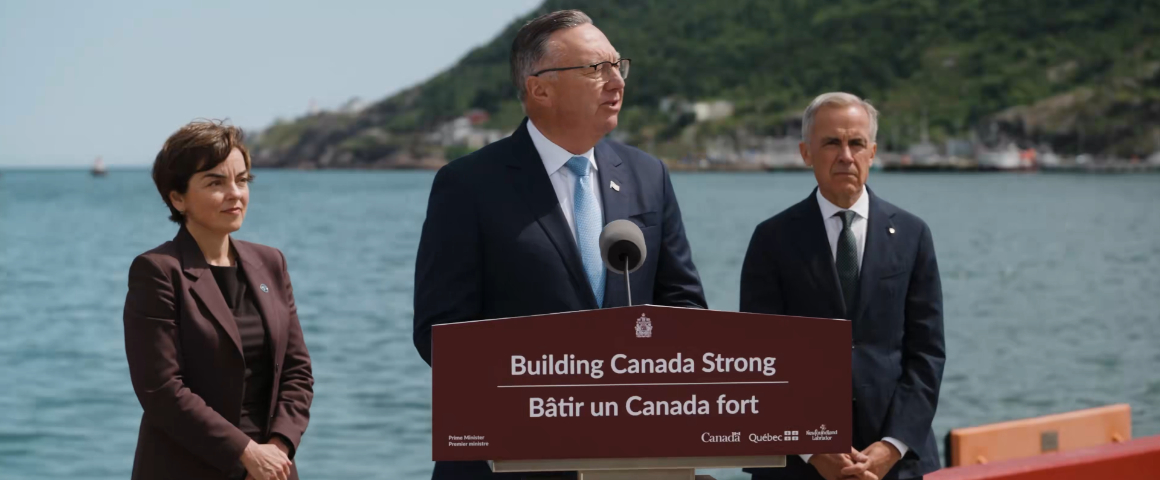
However, Wakeham is now under fire for deciding that a referendum is not going ahead in the interests of securing what his government views as a better deal than the one previously negotiated. The new agreement was announced with much fanfare in St. John’s with Wakeham speaking alongside Quebec Premier Christine Frechette and Prime Minister Mark Carney on August 17 at the city’s waterfront.
“Let the people decide” is undoubtedly a good populist slogan, and some people are feeling burned for being denied the opportunity. To be sure, it is a tricky thing. A referendum, or any vote for that matter, ideally requires a high degree of involvement and learning of the details and issues at stake.
Most people in NL would agree that the current agreement is better than what currently is in force. Putting it to a referendum would mean a Tory propaganda campaign exalting the virtues of the agreed settlement, while there would also have to be some form of neutral public education and engagement over a variety of topics including pros and cons of further hydro development and of course Labrador Indigenous sovereignty.
It would not be impossible to mobilize such activity, but under the present political ecosystem there is little will for such things except during elections. Wakeham probably doesn’t want to rock that boat too hard.
Most NL residents would probably call a “good deal” any deal that means an appreciable reduction of household electricity rates. The new agreement includes a promise from the province to issue a rebate that would amount to about $351 per year. While it certainly isn’t “nothing” it is a laughable amount in the grand scheme of things.
The other main part of the deal is that Ottawa is now a partner, pledging some $10 billion for related hydro developments in Labrador including Gull Island. Carney is spinning this as the biggest clean energy initiative in North America. Maybe it is, but as we know from Muskrat Falls, the extent of how “clean” it is, is a matter of debate.
There also remains the upcoming Quebec provincial election before any deal is finalized. Labrador remains a matter of contention in certain nationalist circles in Quebec and will certainly be a significant talking point during debates.
Meanwhile, Innu governments in Labrador have not been party to these consultations. Once again, we have the makings of a megaproject that continues to exploit Labrador’s resources and people with little regard for real sovereignty and benefits directly to the people who live here.
Megaproject construction jobs are useful but temporary. Then what?
No deal is satisfactory that fails to acknowledge Newfoundland and Labrador’s sovereignty over its own natural resources, or more appropriately the sovereign right of the Innu to decide what happens on their own territory without being bribed by pretty words and short-term jobs.
Support working-class media!
If you found this article useful, please consider donating to People’s Voice or purchasing a subscription so that you get every issue of Canada’s leading socialist publication delivered to your door or inbox!
For over 100 years, we have been 100% reader-supported, with no corporate or government funding.