By Drew Garvie
The Carney government’s Bill C-39, the Building Canada Strong Act is a 246-page omnibus attack on the working class, Indigenous rights and the environment. It rewrites collective bargaining in the Canada Labour Code, guts federal environmental assessment, weakens the Species at Risk Act and Fisheries Act, and creates sweeping new powers to designate “regions of national interest.”
Sold as a response to tariff threats, it is a Trojan horse for the corporate agenda of deregulation and privatization.
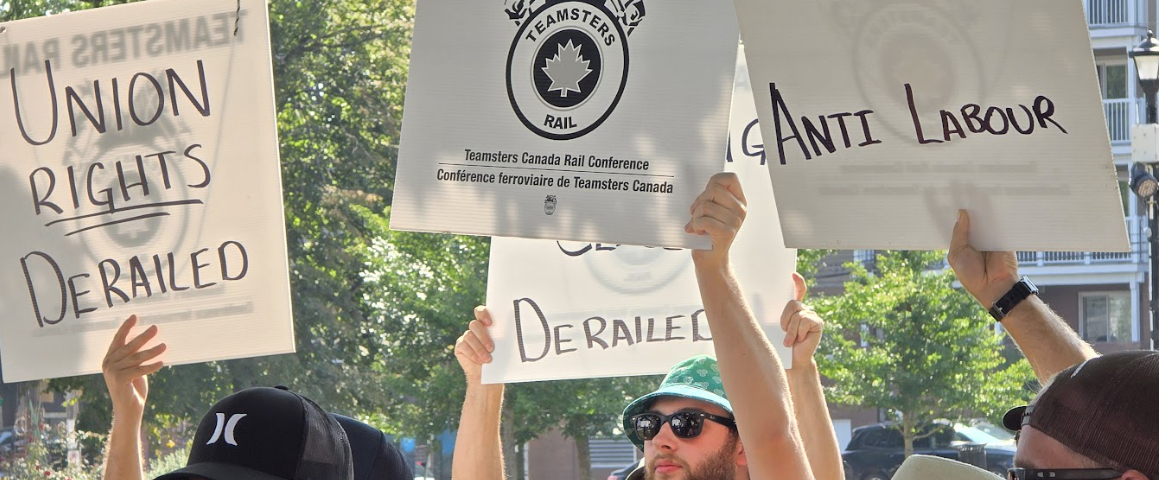
At the centre of the labour changes is an expansion of Section 107 of the Canada Labour Code. It already allows the minister to “take any measure” they think is likely to maintain industrial peace. In practice, a single minister can email the Canada Industrial Relations Board to end a legal strike and impose binding arbitration, without Parliament debating or voting.
Over the last two years, Section 107 has been used against Montreal and west coast dockworkers, CPKC and CN rail workers, Canada Post sorters and carriers, and Air Canada flight attendants. In every case, the CIRB ordered workers back and broke the strikes in all but the Air Canada strike, where workers defied the order.
Bill C-39 doubles down on Section 107. It leaves the existing language and adds supposed criteria: the minister must consider a special mediator’s report and be of the opinion that a strike adversely affects the “national interest.” The minister “may” consider the economy, social disruption and freedom of association. But these are not real guardrails – the minister must only “consider” the report, not follow it, and it is still left entirely up to the minister’s discretion.
The message is clear: employers can avoid serious bargaining and wait for a friendly government to shut down a strike. The recent history of Section 107’s use has shown that this interference in collective bargaining encourages employers to provoke a strike or a lockout. This has emboldened boss’ across the board and has shown that all workers inside and outside the Canadian Labour Congress, beyond federally regulated jobsites, must defend the right to strike.
The right to strike is in the “national interest”
The government justifies these changes with the premise that they are necessary to stop strikes. But strikes are the main tool the working class has to advance its interests.
In 1872, Toronto printers struck for the nine-hour day. They were arrested, but the struggle helped win a shorter workday that became the norm. In 1945, Ford workers in Windsor struck and won the Rand Formula, establishing union recognition and dues checkoff across Canada. In 1981, postal workers struck for 42 days and won paid maternity leave, the first federal union to do so, benefiting workers far beyond CUPW.
Strikes have won weekends, health and safety laws, public services and equality rights. Strikes are not an obstacle to the “national interest” unless you are speaking from the vantage point of the capitalist class who is solely interested in increasing profits.
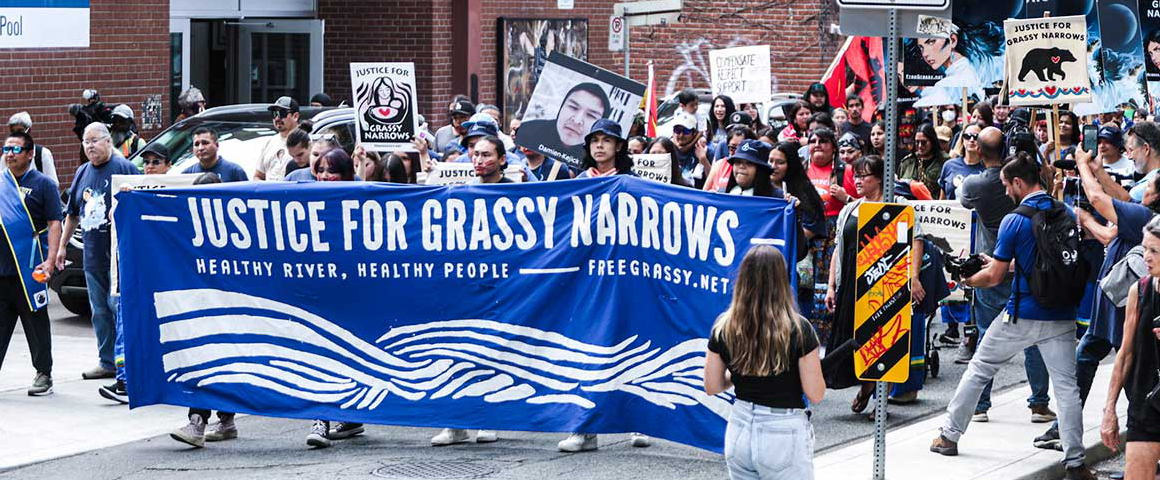
Bill C-39’s “regions of national interest” are a direct attack on Indigenous sovereignty, democracy and environmental protection. The bill would allow any area to be designated a special zone where approvals are “streamlined,” construction can begin before federal permits are granted, and companies can pay offset fees if their projects harm fish habitat. It imposes one-year time limits on assessments and lets ministers waive conditions meant to protect the environment.
As Environmental Defence warns, this would make it practically impossible to meaningfully consult Indigenous communities on major projects, which is constitutionally required. The David Suzuki Foundation calls it a “feeble framework” that steamrolls nature protections.
It is not true that labour rights, environmental protections and Indigenous sovereignty are getting in the way of the national interest. They are getting in the way of immediate corporate profits. Appeals to the right to strike being in the “national interest” are subjective. Which class’s interests? Advancing labour, environmental, and Indigenous rights is in the interests of the vast majority who need higher wages, better living standards, and real equality.
If Carney were genuinely committed to defending Canadian sovereignty, he would reduce corporate influence and expand public ownership. He would bring key sectors like auto under public ownership, expand healthcare and education, and build social housing to create jobs. He would also withdraw Canada from USMCA and NATO – the main institutional ties to US imperialism, which is growing more violent to the point of threatening annexation.
A threat to all workers
Bill C-39 directly affects workers in federally regulated industries and sectors – these include air transportation, ports, rail, telecommunications, uranium mining and processing, and postal services. Together, this represents 1.4 million workers in the private and public sectors.
However, the threat that this legislation represents extends to all workers. Throughout the country, provincial governments are already moving to limit workers’ right to strike and, in the process, severely curtailing their ability to bargain.
In Ontario, Doug Ford’s Conservative government famously invoked the notwithstanding clause in 2022 to pass the Keeping Students in Class Act which pre-emptively criminalized job action by 55,000 education workers. Alberta’s United Conservative Party government of Danielle Smith did the same to teachers last year, when she used the clause to pass Bill 2, the Back to School Act which forced an end to a three-week provincial teachers’ strike.
Also last year, Quebec’s CAQ government passed Law 14, formerly Bill 89, which allows the provincial government to force striking public transit workers into arbitration and continue working for the public’s “wellbeing.”
These attacks are not limited to conservative parties – on September 1, Manitoba’s NDP government moved to declare Dynacare laboratory workers an “essential service,” stripping them of their right to strike and bargaining power.
Carney’s Bill C-39 will establish a new – and much lower – federal standard that provincial governments will eagerly try to match or drive down further.
Unity and struggle to defeat C-39
The way forward is struggle, based on unity inside the labour movement and with a people’s coalition that includes everyone who has something to lose from the Carney agenda.
That means Indigenous nations who have seen attacks on consultation over mining and pipeline projects affecting their territories. It means everyone who understands the need for a just green transition in the face of expanding carbon emissions and extractive projects being expedited to feed the war economy. It means seniors who are disproportionately affected by the rapid privatization of healthcare.
It means students whose accessibility and quality of education are under attack by provincial governments across the country. It means immigrants whose rights are being rolled back and who are told that working in Canada gives them no path to stay. And it means many other sections of working people that are under sharp attack and experiencing rapidly declining wages and living standards.
Recent history shows these rights can be reclaimed through struggle. When Air Canada flight attendants defied a Section 107 order, stayed on the picket line and forced the employer back to the table, they proved that unity and militancy can win. We need escalating action and organization across the country, to stand in solidarity when it is time to defy strikebreaking action by government.
We need a Labour Bill of Rights that would enshrine the right of all workers to take strike action. Carney is riding high after walking away from an unpopular tariff deal. Bourgeois political forces, including most Conservatives, the corporate media and the CBC are united around his government. But this government is forcing through a massive blitz of deregulation, privatization, austerity, and militarization.
We need to draw a line in the sand and break with the self-appointed Captain Canada. Stop Bill C-39!
Drew Garvie is Leader of the Communist Party of Canada
Support working-class media!
If you found this article useful, please consider donating to People’s Voice or purchasing a subscription so that you get every issue of Canada’s leading socialist publication delivered to your door or inbox!
For over 100 years, we have been 100% reader-supported, with no corporate or government funding.