By Owen Schalk
All is not well in the Canadian food system.
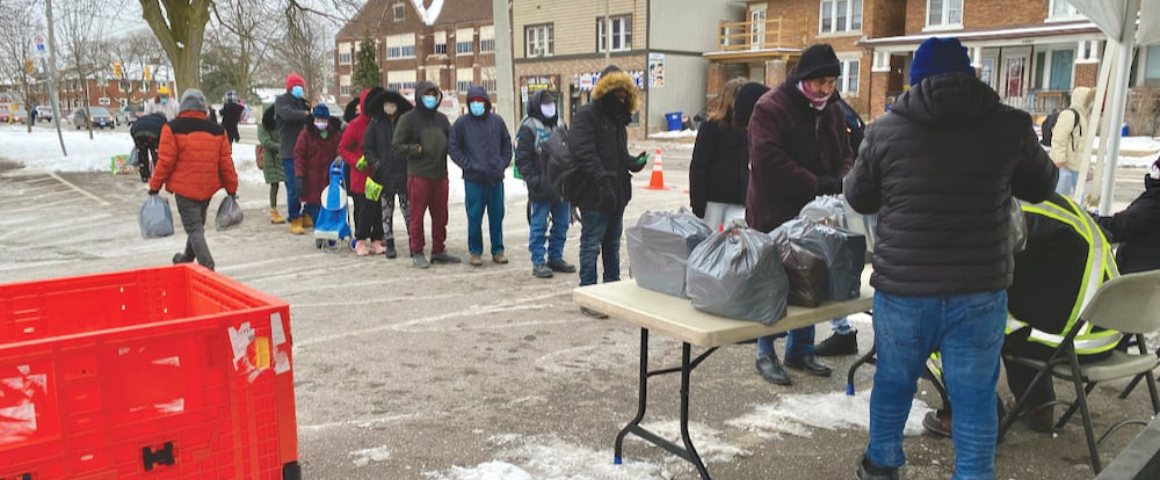
Food prices are rising, while food insecurity is at an all-time high in cities across Canada. The rural communities where most of Canada’s food is produced contend with depopulation, decaying infrastructure and social service underfunding. Extreme weather events and high temperatures, driven by runaway fossil fuel emissions, are putting undue stress on livestock and crops. Frenzied militarization led by the imperialist NATO bloc – which already accounts for 55 percent of global military spending according to the Stockholm International Peace Research Institute – will exacerbate global warming and strain Canadian food production even further.
On top of this, international unrest resulting from the illegal US-Israeli war of aggression on Iran has driven up fuel and fertilizer prices, punishing small-scale farmers who already struggle under high debt burdens, exorbitant input costs and uncertain succession plans resulting from a history of Canadian agriculture policies friendly to corporate farming and hostile to family farms and smallholders.
La Via Campesina – an international farmers’ movement that brings together millions of peasants, landless workers and smallholder farmers around the world – offers the following assessment of the national and international dimensions of the global food crisis:
“On the one hand, rising prices for fuel and synthetic fertilizers – linked to the aggression by Israel and the United States against Iran – are significantly increasing agricultural production costs. On the other hand, poor harvests in several regions of the world due to extreme weather conditions (drought, heatwaves, untimely rains, floods) are all creating supply pressures.
“Past experience has shown us that even modest pressures on agricultural markets can lead to significant rises in food prices. The mechanism behind [food price] inflation is well known: the agri-food industry, financial players who speculate on agricultural commodity markets, and large retailers capitalize on the climate of panic to increase their margins in order to reap exceptional profits.”
In this context, a responsible state would intervene to stabilize food prices, constrain agribusiness and grocery baron profiteering, and construct an economically resilient, ecologically sound food system that recognizes the importance of small-scale localized production in coordination with planned national development goals. A state concerned with the population’s health and wellbeing would strengthen public plant breeding and food safety research, insulating these critical aspects of the Canadian food system from market distortions while expanding upon the already rich accumulation of knowledge that exists in these public departments. Finally, such a state would dramatically reduce fossil fuel emissions, a policy that necessitates massive decreases in military spending.
In all these areas, Prime Minister Mark Carney is doing the exact opposite of what people in Canada need. As a result, he is putting Canada’s entire food system at risk.
In January, the Liberal government announced sweeping cuts to Agriculture and Agri-Food Canada (AAFC), the country’s largest agricultural research organization. Public funding for AAFC has been cut by 15 percent, and 665 employees have been fired. Worse still, Carney announced the closure of seven agricultural research facilities across Canada.
Past research at AAFC has contributed to improved seeding technology, fertilizer efficiency, crop protection strategies, food safety controls, pest and disease control, and sustainable production practices such as no-till farming.
In response to the devastating AAFC cuts, the National Farmers Union (NFU) stated: “By closing the doors on agricultural research centres and research farms, and ejecting people who represent upwards of 10,000 years’ worth of experience from the public service, Canada will be foreclosing on the discovery, problem-solving and knowledge-base that would have been created by these institutions, leaving us more vulnerable with fewer options.”
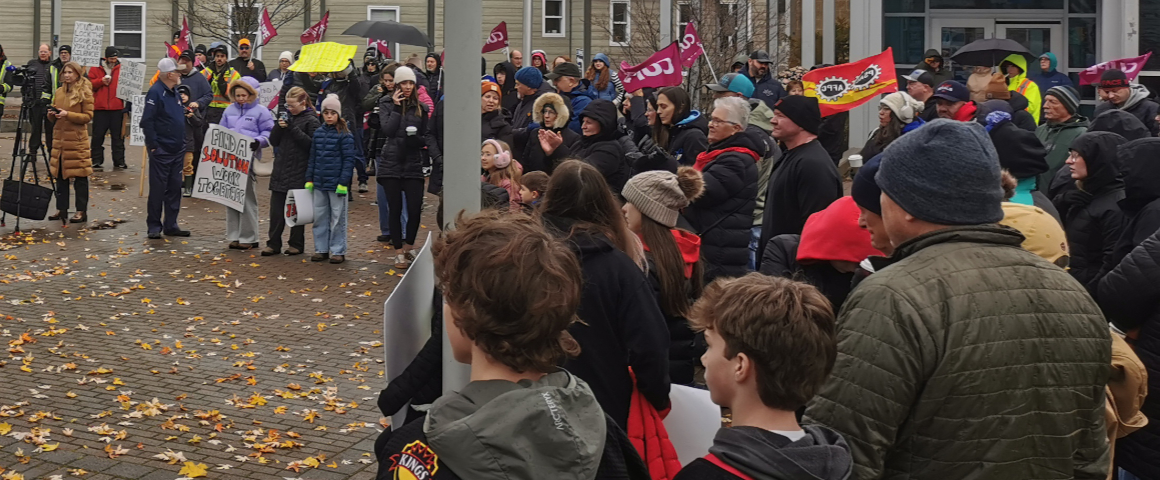
This September, the Carney government rejected a report from an all-party agriculture committee calling for the reversal of the AAFC cuts. The NFU and the Agriculture Union expressed “deep dismay” over the Carney government’s refusal to reverse the cuts.
Phil Mount, Vice President of Policy at the NFU, stated: “AAFC ‘savings’ will be on the backs of farmers, who will lose either regionally adapted seed breeding capacity or regional trials of livestock forages, crop rotations, soil health, organic and regenerative agriculture. The private sector has no incentive to fill those research gaps in the way the government is claiming.”
Mount connected the AAFC cuts to Carney’s militarism – an encouraging demonstration of the progressive farmers movement’s awareness of the connection between militarization and austerity. “Maintaining public sector agricultural research capacity is crucial and entirely possible. Buy 1 fewer F-35 from the Americans and we can keep these stations open for the next 20 years.”
The NFU has described the AAFC cuts as “disastrous” and rallied opposition. But the cuts don’t exist in a vacuum. They are part of a broader militarist austerity agenda that threatens the whole Canadian food system. The fight to defend this food system must be actively supported by a broad alliance of farmers and farm workers, unions, environmentalists, community activists and others. It is a fight not only to defend publicly funded agriculture research, but family farms, smallholder operations and Canada’s food security.
In addition to the AAFC cuts, Carney has fired 1,300 public workers from the Canadian Food Inspection Agency (CFIA), the federal regulatory body responsible for food safety. Bill C-30, passed in June, gives Carney’s government the ability to authorize the use of pesticides previously banned by Health Canada for posing serious risks to human health and the environment – a potential boon to the agribusinesses that produce the most widely used pesticides.
In bilateral trade talks with Canada, the Trump administration has taken aim at Canada’s supply management system, a unique system of production discipline (i.e., quotas), cost-of-production pricing and import controls that has protected many Canadian farmers from the extreme forms of consolidation seen in the US.
Carney has declared his loyalty to supply management; however, he appointed Mark Wiseman, a former BlackRock manager and vocal critic of supply management, as ambassador to the US. Moreover, Carney’s many capitulations to Trump – on the digital services tax, military spending and integration, and more – mean that the prime minister’s word cannot be trusted.
Internationally, the Carney government is actively inflaming the numerous crises that are driving Canadian agriculture further toward crisis. Carney has unequivocally backed the illegal US-Israeli war on Iran, which has dramatically raised farming input costs. The prime minister has refused to condemn war crimes like the Minab school massacre; most recently, Carney shrugged off US President Donald Trump’s genocidal threat to “annihilate” Iran by claiming that Trump was merely speaking “the language of war.”
NATO military assets have been directly involved in the US-Israeli aggression, which has killed over 3,400 Iranian civilians and injured 33,000. Although Carney claims that the Canadian military has not participated in the illegal strikes, he has allowed US warplanes to refuel in Canadian airspace before bombing Iran.
Meanwhile, Canadian troops remain stationed in US military bases in the region. A Canadian colonel named David Turenne even received the Meritorious Service Cross for his activities at the US military’s Al Udeid Air Base during the “Twelve Day War” of June 2025. These facts raise the possibility of direct Canadian involvement in the US-Israeli war of aggression, which set the Persian Gulf on fire and precipitated the global agricultural crisis which farmers around the world, including in Canada, have been forced to endure.
In purely environmental terms, militarization under the umbrella of NATO presents a grave threat to the Canadian food system. Scientists for Global Responsibility (SGR) has argued that NATO members spending 3.5 percent of their GDPs on their militaries would be akin to doubling Brazil’s greenhouse gas emissions (Brazil is the world’s fifth largest emitter). SGR states: “It is extremely difficult to see how the current and planned military spending increases can be reconciled with the transformative action necessary to prevent dangerous climate change.”
In a report on climate change and agriculture, AAFC notes: “Increased temperatures, longer growing seasons, shifting precipitation patterns and an increase in the frequency and intensity of extreme events from climate change will bring challenges to Canada’s agricultural sector.” Across Canada, “wetter than normal springs will present challenges such as the need to delay seeding.”
Furthermore, the AAFC writes: “Flooding and other extreme events, including wildfires, may result in loss or relocation of livestock and damage to crops; and increased frequency and intensity of storms could result in power outages, affecting livestock heating and cooling systems as well as automated feeding and milking systems.”
Farmers and rural dwellers are already experiencing the adverse impacts of extreme weather and higher temperatures on their communities’ agriculture operations. These impacts will only intensify as Carney pushes new oil and gas extraction and the massive expansion of Canada’s fossil fuel-guzzling military machine.
The Canadian government should protect publicly funded agriculture research, not cut it. The government should support peace and demilitarization, not just in the name of farmers in Canada but of all the world’s workers and oppressed peoples. The government should ensure that food produced in Canada is suitable for Canadian ecological conditions, and that its production does minimal harm to people and the environment; moreover, the state should get serious about combatting rising food insecurity, guaranteeing that food produced in Canada under a socially and environmentally responsible agriculture model is provided to all.
Such policies could be implemented under a socialist state, freed from the logics of private accumulation and anarchic production. The logic of capitalism, however, pushes toward austerity, militarization, imperialist war, environmental degradation and monopolization. For these reasons, family farms and small-scale farmers in Canada – indeed, all workers and progressives throughout the country – have a vested interest in the struggle for socialism.
[Photo of food bank line: CountryGuide]
Support working-class media!
If you found this article useful, please consider donating to People’s Voice or purchasing a subscription so that you get every issue of Canada’s leading socialist publication delivered to your door or inbox!
For over 100 years, we have been 100% reader-supported, with no corporate or government funding.