By Silla Tauler
On August 31, just a week before Ontario’s return to school, collective agreements expired for teachers and other education workers.
Despite calls from education unions to start bargaining early, Minister of Education Paul Callandra insisted in March that workers would start the new year with ratified contracts and there would be no disruption to student learning due to labour strife in 2026-2027. Without the extended start to negotiations, Ontario’s school board sector unions all submitted their intent to bargain to the employer in June. Since then, education workers are at a familiar place with talks over the split between central and local bargaining items breaking down, and the issue sent to arbitration by the Ontario Labour Relations Board.
Since 2014, when the then Liberal government passed the School Boards Collective Bargaining Act, there has been this dance every time workers in public education go to the bargaining table.
Both sides meet centrally and hammer out the rules of engagement, including which issues will be negotiated as part of the central agreement and which will be divested to locals. This split traditionally works along the lines of having issues related to money bargained centrally. In addition to salary, this also includes things like class sizes for teachers and workload language for education workers more broadly. Local issues tend to be procedural: legitimate reasons for personal day use, how long you remain subject to recall after being laid off, whether seniority accumulates depending on what kind of leave you have undertaken, etc.
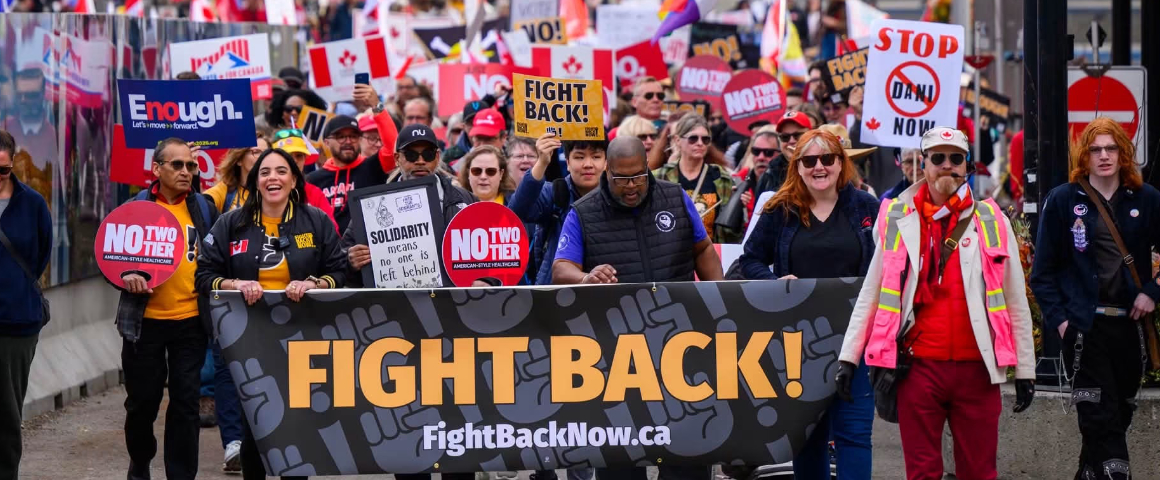
This split is important to education workers and their unions because many of these local items impact important features of their work. So much so that during this round of bargaining, as part of their outreach, unions have all publicly come out and stated frankly that the government’s proposal is to take almost every item and negotiate it centrally.
The arguments put forward by the education sector unions against this centralization push are based around the nature of many school districts not being reflective of similar conditions in larger metropolitan areas, like Toronto.
For example, if you live in Northern Ontario and are a secondary school teacher your next closest work site may be 150 kilometres or more from your home. Those contracts have typically had greater protections for how members are reassigned and moved around between school years, whereas teachers living in the Greater Toronto Area may find themselves with more options of nearby workplaces if they must be reassigned.
A one-size-fits-all approach to these kinds of procedural issues could have significant deleterious effects on education workers, and worsen the already challenging recruitment and retention situation for education workers in Ontario.
In 2022, teacher unions agreed to enter into voluntary binding interest arbitration, with both sides told by the arbitrator that any breakthroughs in terms of class size or other contract language would need to be settled at the bargaining table. This leaves an arbitrated settlement on these contentious issues unlikely this round of bargaining, and education worker unions in a position where they feel they need to fight.
Where does this delay put the sector this fall, as students return to school and parents look to the education sector to provide education services and a safe place for their children during the school day?
As of right now, this procedural delay prevents either side from declaring a strike or lockout. Neither side has formally presented their opening positions and are waiting for a negotiated settlement on the central/local split before getting down to the hard fight ahead.
The Elementary Teachers’ Federation of Ontario (ETFO) has publicly stated their intent to hold strike votes in the fall and that a big part of their goals for this round of bargaining is clearer class size language for grades 4-8 and a reduction in class sizes in kindergarten classrooms. The Ontario Secondary School Teachers’ Federation (OSSTF) has been less vocal in terms of their plans for strike votes in the fall, but they have committed to engaging in this round of bargaining along the lines of the common front that education sector unions used to moderate success in Quebec during negotiations in 2023. OSSTF is looking for greater clarity on class size language in de-streamed Grade 9 classes, improvements to workplace health and safety protections, and protecting sick leave and other parts of the contract.
The Ontario government’s response has been to hint that they plan to intervene in case of labour disruption this school year. When asked by reporters about the announcement that talks had stalled over the rules of engagement between the government and unions, Callandra stated that “the year will start as scheduled and it is my expectation that kids will be in the classroom for a very long time.”
This comment from the Minister of Education came amid news that a planned government smear campaign against teachers was in the works. In news released recently, production was underway of an advertisement campaign to call into question the legitimacy of teachers using their sick days and whether their current amount is justified. The government intends to push teachers into a position where they will need doctor’s notes for illnesses, with the obvious consequence of flooding walk-in clinics and family doctor offices with 275,000 education workers looking for a sick note so they can stay home with a cold.
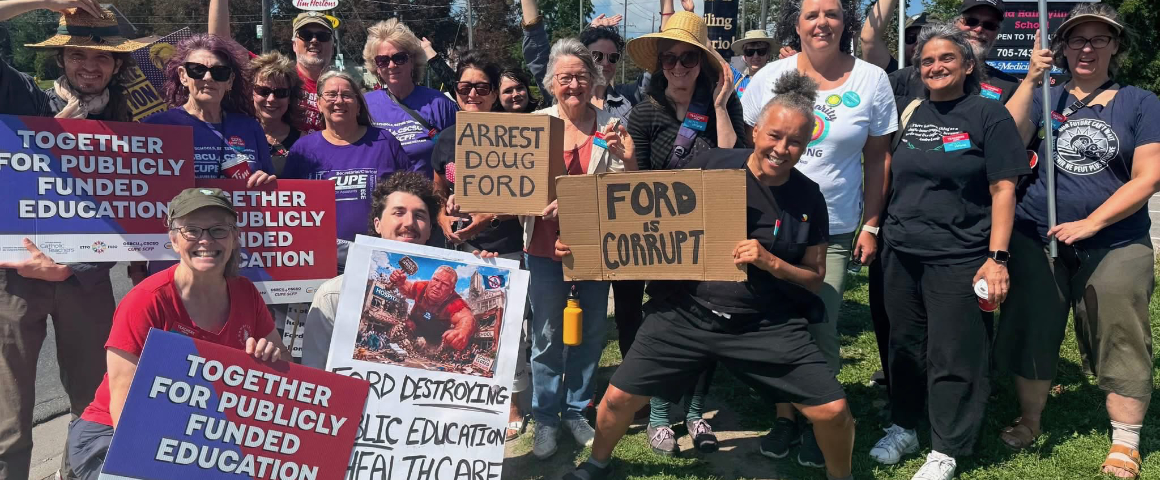
Attempting to defend these leaks, the Minister said that the unions had started this political mud slinging and pointing to OSSTF campaigns like “Underfunded and Over It!” or ETFO members distributing pamphlets in ridings held by provincial cabinet ministers.
[Photo: ETFO X]
Support working-class media!
If you found this article useful, please consider donating to People’s Voice or purchasing a subscription so that you get every issue of Canada’s leading socialist publication delivered to your door or inbox!
For over 100 years, we have been 100% reader-supported, with no corporate or government funding.