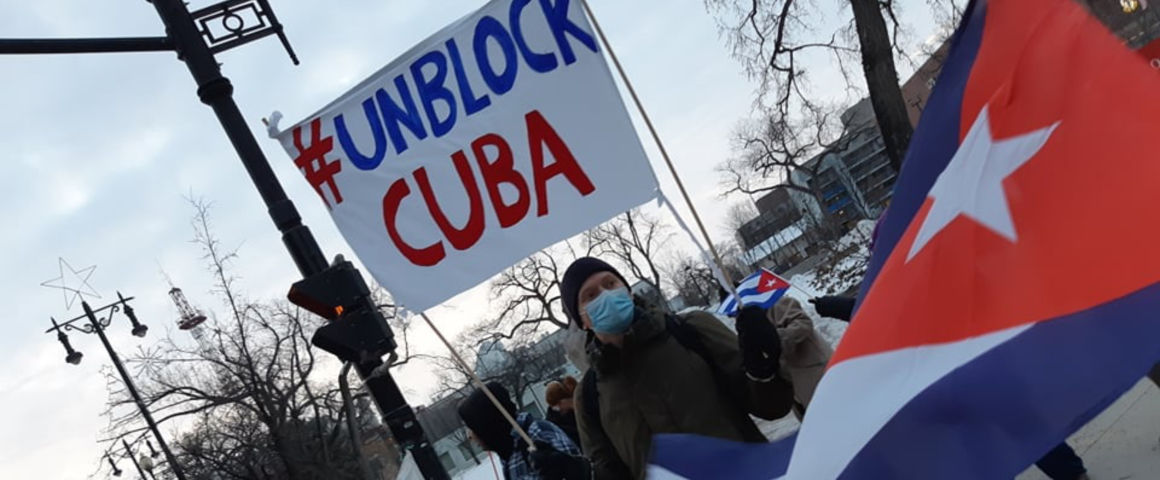
On February 22, a wide range of organizations, including labour, human rights and peace and solidarity groups, participated in the People’s Tribunal on the US blockade on Cuba. We are pleased to publish the tribunal’s findings and declaration, below.
The case before us is about the tragic and devastating consequences of 67 years of brutal economic war against Cuba.
We have heard the credible testimony of witnesses representing various sectors of Canadian society, union leaders, students, clergy, academics, human rights, peace and solidarity activists as well as members of the Cuban community in Canada. They have testified about the well documented devastating effects of the 67 years of Unilateral Coercive Measures on Cuban society and its economy. The impact on healthcare, agriculture, water sanitation, transportation, trade, finance, etc. Virtually every aspect of economic activity has been impacted in these 67 years.
The Law
It is well established in international law that Unilateral Coercive Measures are a violation of international law. So much that the UN has created the office of the rapporteur against Unilateral Coercive Measures.
From its inception, the US blockade violates the principle of sovereign equality of nations, the prohibition of interference in the internal affairs of other states, and the related principles of equality and self-determination of peoples. It also violates Cuba’s freedom of international trade and navigation, the prohibition of intervention established in customary international law, the articles of the Universal Declaration of Human Rights, the International Covenant on Economic, Social and Cultural Rights of 1966, as well as the provisions of the World Trade Organization (WTO) on the protection of freedom of trade.
International law holds that a blockade of fuel on a country is one of the most serious violations of international law when it causes severe suffering to the civilian population, restricts vital humanitarian aid or functions as a form of collective punishment.
A blockade that targets a general population rather than specific combatants, such as cutting off fuel to an entire territory, is considered a form of collective punishment, which is strictly prohibited under Article 33 of the Fourth Geneva Convention.
Under domestic Canadian law, a fuel blockade could also constitute crime against humanity under the Crimes Against Humanity and War Crimes Act S.C. 2000, c.24 which allows Canada to prosecute individuals for international crimes regardless of where they were committed.
The Findings:
67 years of Unilateral Coercive Measures – 64 years of Embargo/Blockade
The Tribunal finds that the United States is guilty of engaging in economic warfare against Cuba for over 67 years.
This Tribunal also finds the United States government is guilty of willfully ignoring for over 33 years the resolutions of the United Nations calling for an end to the illegal blockade on Cuba.
Fuel Embargo – Blockade
The US Government, through its President’s executive order of January 29, 2026 drastically escalated the blockade against Cuba by threatening countries that ship oil to Cuba with crippling sanctions. It also illegally seized an oil tanker heading to Cuba. All of this resulting in a stoppage of critical oil shipments to Cuba, causing extreme hardship on Cuban families, hospitals, schools, food production, transportation, etc. Such extreme actions constitute collective punishment and constitute crimes against humanity.
This People’s Tribunal finds that the United States is guilty of committing crimes against humanity in Cuba that can be considered a form of genocide.
Economy
This Tribunal finds that the US Blockade on Cuba has caused hundreds of billions of dollars in damages to Cuba’s economy and its society.
Final Declaration
The results of these deliberations are clear and unequivocal: the U.S. state, and the Trump Administration in particular, has been found guilty of crimes against the Cuban people and Cuba’s right to national self-determination. These policies and threats violate Cuba’s sovereignty, violate the sovereignty of other countries and are a violation of the principles and foundations of international law. The U.S sanctions against Cuba must not be allowed to stand.
This assembly urgently calls upon the Canadian government to publicly condemn Washington’s imperial overreach, and to take immediate action to render humanitarian assistance to Cuba and her people in their hour of need. This should include the delivery of humanitarian aid in the form of food, medical supplies and the shipment of oil supplies.
We salute the tireless efforts of the Canadian Network on Cuba and its affiliates, and countless other organizations and individuals of conscience who have spoken out against these atrocities and have demanded that Ottawa act now.
As we adjourn these proceedings, let all of us here today – and all friends of Cuba across Canada – agree to spare no effort in expressing our solidarity by signing the Parliamentary Petition, by raising funds and materiel for emergency aid, and by pressuring governments at every level to address and combat the effects of the this humanitarian catastrophe befalling the Cuban people.
Support working-class media!
If you found this article useful, please consider donating to People’s Voice or purchasing a subscription so that you get every issue of Canada’s leading socialist publication delivered to your door or inbox!
For over 100 years, we have been 100% reader-supported, with no corporate or government funding.