By Cam Scott
Since the successful overthrow of the US-backed Batista government in 1959, and for years of struggle preceding, the Cuban Revolution has been a beacon to the world. The lessons of Cuba can hardly be overrated, extending from the local to the international level with an integrity beyond reproach.
In every aspect of society, Cuba continues to model truly popular political participation, from the evolving mandate of the Committees for the Defence of the Revolution to the equitable redrafting of social and domestic responsibilities enshrined in the Families Code. If anything, the small island’s socialist democracy has only deepened under duress.
Cuba’s excellence can even make it difficult to impress upon the proverbial man-on-the-street just how asphyxiating the more than six decades long US blockade remains. In spite of remarkable urban agriculture, there are drastic food shortages; despite an ecological approach to public health, sanitation becomes a problem; and so on.
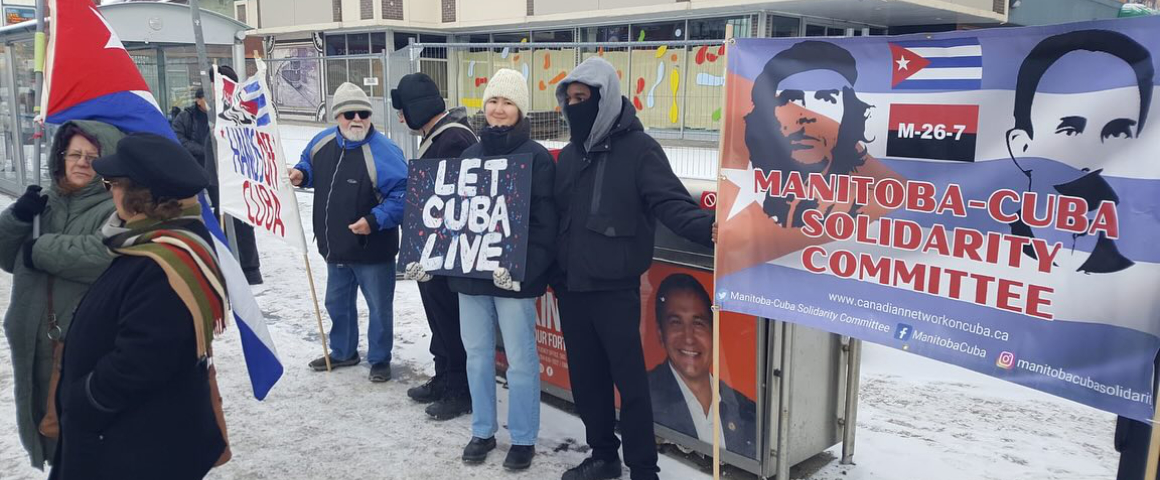
In the first months of the COVID-19 pandemic, for example, Cuba solidarity groups in Canada found ourselves advocating with the Southern Chiefs’ Organization for Cuban doctors to attend remote First Nations in Manitoba at precisely the same time as we were fundraising to send sutures and syringes to struggling Cuban hospitals.
While heroic voluntarism and material scarcity are not in any way self-cancelling factors, the reality of the blockade produces a cognitive dissonance in the minds of many would-be supporters.
Despite our attempts to explain the depravity and deprivations of the US blockade, many people walk away from our educational campaigns rightly convinced of the profundity of the Cuban example but without a sense of urgency as to the task of solidarity. Others have taken a mental average of the best and worst conditions since the Special Period in the 1990s and, for only the best reasons, fail to perceive dangerous changes in US policy which vacillates from week to week and year to year with potentially mortal consequences.
At the same time, strictly humanitarian campaigns concerning only worsening conditions risk shirking our responsibility to the Cuban Revolution and underrating its sovereign capacities. Plainly, we must continue to politicize this work because Cuba – even on the brink – remains one of the most humane societies ever created, and we carry the staggering burden of this realization every day.
Cuba has given us the horizon, and as the US escalates its illegal blockade to new heights of targeted cruelty, we must practically repay the credibility and inspiration that we borrow from this most important relationship.
Denunciation of a crime
In an infamous 1960 memo, US Deputy Assistant Secretary of State for Inter-American Affairs Lester D. Mallory recommended “a line of action [that would] bring about hunger, desperation and overthrow of government” in Cuba. This memo, concerning “The Decline and Fall of Castro,” would define the next sixty-five years of US policy towards Cuba, which includes every conceivable form of aggression and subterfuge. For as many years, however, the US has failed to replace the revolutionary government of Cuba – and not for lack of trying.
Alongside covert acts of sabotage and direct military threat, the principle means of regime change has been a comprehensive unilateral blockade, denounced by the overwhelming majority of the General Assembly of the United Nations in annual resolutions since 1992. Because of this program of economic warfare, Cuba must operate without credit and independently of almost all existing financial infrastructure. According to a 2024 report by the Cuban Ministry of Foreign Affairs, the cost of just eighteen days of blockade is equivalent to the annual maintenance cost of the entire National Electrical Power System – approximately $250 million USD.
In 2023, an International Tribunal against the Blockade of Cuba took place in Brussels, placing testimony from dozens of experts before a European jury. Though symbolic and non-binding, these proceedings were published in a 2024 report entitled Denunciation of a Crime, which should be read in full. Upon consideration of the evidence, the judges rendered a solemn verdict:
“No blockade has been as comprehensive, long-lasting and brutal against a people as the one that the United States have maintained against Cuba. The blockade has resulted directly and indirectly in the loss of numerous human lives. The US has decided to maintain this blockade until the Cuban people decide to bow. The US are determined to maintain measures that are calculated to bring about in the long term the physical destruction at least in part of the Cuban people. Such an attitude could amount to a crime of genocide.”
Since this summit, the US has only increased its maximum pressure campaign. President Trump has promised a change of Cuban government to his base, including a traitorous section of Cuban-Americans, in no uncertain terms. In fact, it looks as if this prominent Miami lobby is effectively calling the shots. As US Secretary of State Marco Rubio flirts with further military action in Venezuela and calls for a new, US-compliant government in Cuba, Representative Carlos A. Giménez (whose wealthy parents left Cuba after Castro’s land reforms) cautions tourists to leave the island “before it is too late,” promising to suffocate the country.
In a recent interview with right-wing journalist Hugh Hewitt, Trump boasted of his intensification of the blockade: “I don’t think you can put much more pressure [on Cuba], unless you go in and wreck the place.” But no sooner had these words left his mouth than he began to entertain precisely such a scenario, offering on social media that he could make Marco Rubio the President of Cuba within a year. And with the illegal abduction of Venezuelan President Nicolás Maduro fresh in the headlines, Trump’s bluster seems more like a blueprint.
Before recent US attacks, both at sea and on the city of Caracas, Venezuela was Cuba’s largest oil supplier, responsible for approximately one-third of the island’s energy needs. With this relationship choked off under military threat, the Cuban people looked to Mexico for assistance amid fiery rhetoric from President Claudia Sheinbaum. Not a week later, however, Mexico’s state-owned oil company Pemex appeared to cancel shipments to Cuba under US threat. Sheinbaum has since defended this interruption as a “sovereign” decision, pledging humanitarian aid to Cuba instead. But whatever is happening behind the scenes, this retreat bodes ill.
Since Mexico’s reversal, Trump has declared a total blockade of fuel to Cuba, imposing harsh tariffs on countries that supply oil to its government and threatening a naval blockade to ensure this result. This is a policy of collective punishment, weaponizing power outages and acute shortages against the Cuban people.
Cuba’s Soviet-era power grid requires a continuous supply of oil to run, and down two significant suppliers, onlookers claim that Cuba may have less than two weeks of fuel remaining. The island has been plagued by rolling blackouts for the past year, exacerbated by the impact of Hurricane Melissa – but a shortage of this severity threatens starvation and death. Hospitals will lose power entirely. Water service and sanitation will cease to operate. Food will spoil. All production will halt.
Florida Representative María Elvira Salazar has since offered that starving children are simply the price that the US must pay to “free Cuba forever.” This level of candor is alarming, but not atypical of the US anti-Cuba lobby, who have been planning such an operation in sadistic detail for their entire lives. Plainly, the present cruelty is an outcome of sixty-seven years of counterrevolutionary strategy by the US ruling class and the exiled scions of Batista-era collaborators.
That being true, these traitors and reactionaries should already know what they’re up against. To quote a recent statement by the Revolutionary Government, Cuba “is a country of brave and combative people. Imperialism is mistaken when it believes that economic pressure and the determination to cause suffering to millions of people will break their determination to defend national sovereignty and prevent Cuba from falling, once again, under US domination.”
Since January 3 and throughout the present crisis in the region, the Cuban people have flooded the streets of Havana in this spirit of national defence. On January 28, marking the 173rd anniversary of José Martí’s birth, President Miguel Díaz-Canel led thousands of students and workers in an annual torchlight march to commemorate their national hero and the independence that he represents. This year, however, the simple gesture of raising a flame in the dark assumes a profound significance.
No matter how the forces of imperialism choose to proceed, they will never have faced an adversary such as this. And as Cuba continues to light our way, we must do everything in our power to bolster their numbers abroad. Another world depends upon this outcome, and there is no time left in which to wait and see.
Support working-class media!
If you found this article useful, please consider donating to People’s Voice or purchasing a subscription so that you get every issue of Canada’s leading socialist publication delivered to your door or inbox!
For over 100 years, we have been 100% reader-supported, with no corporate or government funding.