BC Health and Housing Committee
Data obtained through a Freedom of Information request by the British Columbia Housing Action Coalition uncovered an average vacancy rate of 9.16 percent across 2,086 supportive housing and single-room occupancy (SRO) units operated by PHS Community Services Society and Lookout Housing and Health Society. An additional 7.24 percent of units were listed as having “data pending,” meaning their occupancy status remained unknown. On average, the 191 confirmed vacant units had sat empty for nearly a year as of December 31, 2024.
These figures come from a pool of units across 37 buildings in cities including Vancouver, Victoria, New Westminster, Abbotsford and others. The average time each vacant unit had remained empty was 353 days – almost one year. Some buildings showed much higher vacancy rates than the average. For example, Lookout’s Walton Residence Redevelopment reported a vacancy rate of 27.66 percent, while PHS’s Hazelwood Redevelopment showed a 23.36 percent vacancy rate.
These supportive housing and SRO units, funded and regulated by BC Housing, are designated for some of the most vulnerable members of our communities – people experiencing or at risk of homelessness and those living with mental health or substance use challenges. These are publicly funded, publicly mandated units that are supposed to be part of the province’s frontline response to poverty and housing precarity. Their prolonged vacancy or untracked status is not just bureaucratic negligence; it is structural failure.
For comparison, Canada Mortgage and Housing Corporation reported that BC’s private rental vacancy rate was 1.9 percent in 2024. A vacancy rate of over 9 percent during the coldest part of the year points to deep dysfunction in the system meant to house those most in need. Whether caused by poor coordination, underfunded staffing and infrastructure, or a lack of accountability, the outcome is the same – people remain unhoused while public resources sit unused.
Outsourced management partly to blame
These significant vacancies reflect systemic issues within BC’s supportive housing model, which increasingly relies on third-party non-profit providers to operate publicly funded housing with minimal public oversight. Decisions around tenanting, repairs, staffing and renovations are often opaque. In many cases, tenants and frontline workers are the last to know when units become available or why they remain untenanted.
This outsourcing model is a hallmark of Canadian neoliberal policy. It allows the provincial government to claim progress on housing while shifting responsibility for failures onto service providers. It also shields BC Housing from direct accountability when units sit empty, buildings fall into disrepair, or vulnerable tenants are evicted. The result is a fractured, under-resourced housing system where data is incomplete, turnover is delayed, and people’s basic needs are pushed aside. If these are public assets, they must be subject to public control and democratic oversight.
While Vancouver accounted for the largest share of units in the data set, the problem of inaccessible publicly funded housing extends far beyond the city’s core. The FOI included buildings in Victoria, New Westminster, Abbotsford, Langley, Campbell River, Duncan, North Cowichan and North Vancouver. In smaller municipalities, where resources are scarcer and oversight is weaker, the impact of these vacancies on their respective communities may be even more severe. These vacancies raise urgent questions about the province’s ability to ensure access to housing across BC.
Lack of transparency
This information did not come from a government press release or a housing provider’s report. It was obtained through a Freedom of Information request filed by members of the BC Housing Action Coalition. In the absence of transparency from the provincial government, BC Housing or the non-profits it funds, it is community organizers, tenant advocates and frontline workers who are uncovering the truth. The surprising reality is that it is the people’s movement providing the government with information it already has but has not shared or acted upon.
Every safe, vacant unit must be opened and occupied immediately, and a full public audit of BC Housing-funded buildings must be carried out. Housing is a human right, and no one should be left out in the cold while public units sit empty.
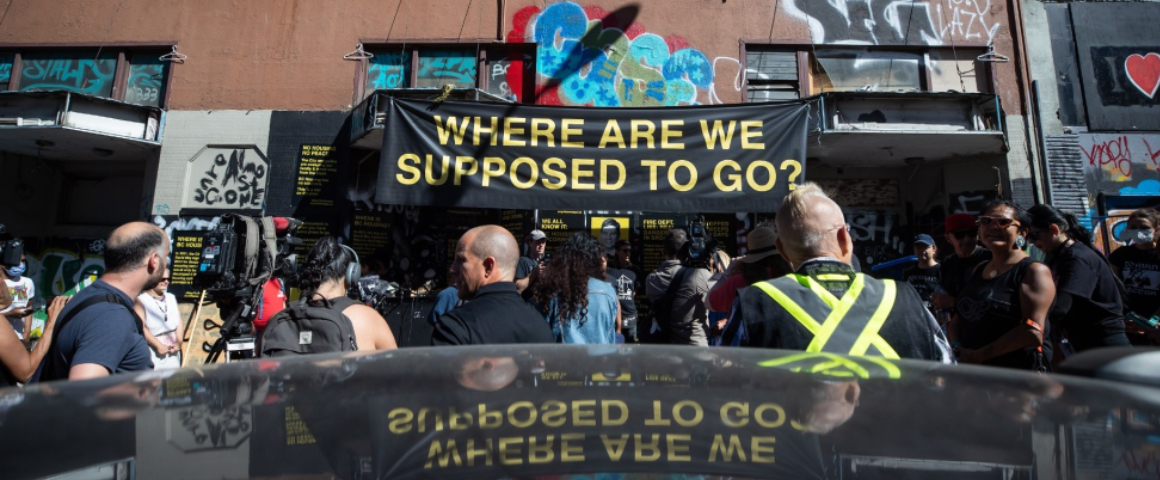
[Photo: PHS Community Services Society]
Support working-class media!
If you found this article useful, please consider donating to People’s Voice or purchasing a subscription so that you get every issue of Canada’s leading socialist publication delivered to your door or inbox!
For over 100 years, we have been 100% reader-supported, with no corporate or government funding.