PV staff
The Tudeh Party of Iran says that the ongoing talks between the United States and the Islamic Republic of Iran have been essential for preventing ongoing tensions from developing into an outright war. Specifically, Tudeh is concerned about the risk of a military attack from either the US or Israel.
At the same time, however, the Party warns that “given Iran’s currently crisis-ridden economy and gloomy predicament, the complete bankruptcy brought about by three decades of implementing anti-national foreign policies, and Khamenei’s empty hand vis-à-vis Trump, our country still faces a range of grave threats from the most destructive factions of US imperialism for the time being.”
Tudeh notes that Washington is increasingly resorting to wars and coups as a way to intervene in the internal affairs of other countries and maintain US control. The US has a long history of such interference in Iran, and Tudeh warns that “Trump would undoubtedly seize upon any opportunity to steer the Islamic Republic in a direction whereby it essentially becomes a strategic ally of the US in global interactions.”
The Party says that, while Iran is trying to obtain guarantees from the US, it is in a very weak position during the negotiations. Part of Iran’s weakness derives from the government’s own policies, both foreign and domestic. But Tudeh agrees that another factor is “Trump’s lack of adherence to international laws and regulations,” which it says means Iran’s “recent moves to gain traction through the support of Russia, China, and Saudi Arabia are also unlikely to have a significant impact on the negotiations.”
Taken together, this means that while the ongoing negotiations should be welcomed as a way to avoid war, they should also be “viewed with caution, as the material content of the negotiations has so far been kept secret and behind closed doors with the theocratic regime of Iran having sat at the negotiation table dealing from a weak position.”
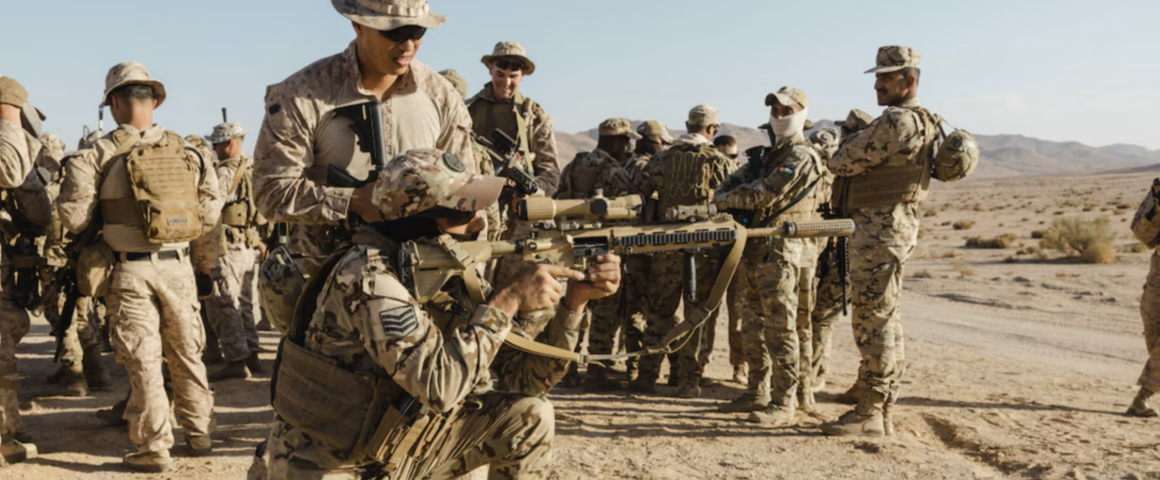
Furthermore, the US is deliberately maintaining and even escalating uncertainty and tensions in the region. This includes a massive deployment of fighter squadrons, stealth bombers, air defenses and munitions near Iran and Yemen over the past two months, and comments from Donald Trump that he will bomb Iran if a nuclear deal is not forthcoming.
Alongside these threats, Tudeh notes that “Netanyahu and his warmongering policies remain the proverbial stick in Trump’s hand.”
At the same time, however, the Tudeh Party is concerned that Iran’s theocratic regime has “neither the will, nor the capacity, nor the desire to properly manage this crisis with the aim of ensuring Iran’s security, national interests and the livelihoods of its people are protected from any threats.” It notes that, since Iran’s foreign policy positions are largely “subordinated to the developments and moves on the side of the US government,” the Iranian government’s main aim is to divert public attention away from its policies which have exacerbated the current crises, both internally and externally.
Tudeh is worried that Khamenei’s representatives in closed-door negotiations with the US will make secret concessions to “save the regime” at the expense of the Iranian people’s material interests. This includes encouraging foreign investment, including from the US. “Bringing up the issue of domestic and foreign private sector investment, which Khamenei and President Pezeshkian consider to be an all-encompassing panacea for problems from a neoliberal economic perspective, shows the regime’s utter desperation as well as disregard for development-oriented growth and the interests of the working people of Iran.”
Within Iran, there are ruling interests who seek to use the conflict with the US as a way to maintain the ideological dominance of “political Islam,” the same ideology from which their political and economic privileges flow. Voices within these circles – in concert with some pro-reform figures like economist Saeed Laylaz – argue for Iran to build a nuclear weapons arsenal as a necessary step toward confronting the US. The Tudeh Party argues that this kind of militaristic drive threatens working people in both the short and long term.
“All the belligerent factions within the regime, including figures like Laylaz as well as the monarchist pseudo-opposition in exile, prescribe military tension – the fire of war and destruction – for the Iranian people, albeit for different reasons. In stark contrast, the policy of the main part of the leftist and progressive nationalist forces is focused on the need to maintain a lasting peace to prevent war – because in the absence of peace, not only will war, killing and destruction be imposed on the nation, but the repression of the regime will be much harsher and consequently the struggle for freedom and social justice will be rendered much more difficult.”
Within Iran, Tudeh is calling on political and social activists to unite around the call for peace, specifically by urging that negotiations continue and that their subject and content be open and public. “By imposing the recourse to peace on the leadership of the Islamic Republic regime, it is possible to play an effective role in preventing the outbreak of further tensions, conflict, and possibility of a catastrophic war.”
In the international arena, Tudeh is calling on peace and progressive forces to mobilize against a US-Israeli military attack on Iran. This includes public outreach and education, building unity among labour and social movements, and pressuring foreign governments to block any path to war and aggression.
“Let us join hands with each other and redouble in our efforts on the common objective of seeking peace and defending national sovereignty, to force the theocratic regime to retreat and thus pave the way for the transition from the current dictatorial regime to a national and democratic republic.”
Support working-class media!
If you found this article useful, please consider donating to People’s Voice or purchasing a subscription so that you get every issue of Canada’s leading socialist publication delivered to your door or inbox!