By Nigan Juniper
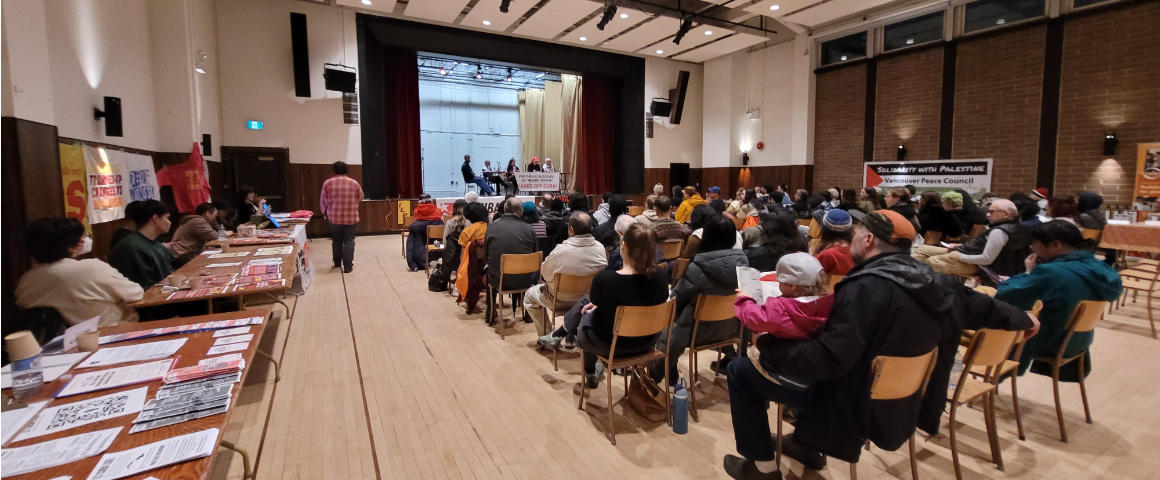
Nearly 100 people filled the Russian Hall in East Vancouver on March 19 for the Peoples Forum for Peace, an event organized by a newly formed coalition of labour and grassroots peace organizations including the Canadian Cuban Friendship Association (CCFA-Vancouver), Vancouver and District Labour Council (VDLC), CoDevelopment Canada (CoDev), Vancouver Peace Council (VPC) and International League of People’s Struggle Canada (ILPS).
The coalition was formed in the wake of the January 3 kidnapping of Venezuelan president Nicolas Maduro. CCFA-Vancouver, VPC and ILPS responded to this act of naked imperial aggression by holding a joint rally on January 4. Understanding the necessity of strengthening the link between the broad peace movement and organized labour, the trio of anti-imperialist groups drew on their working relationships with CoDev and the VDLC to integrate the perspectives of the organized working class into the coalition’s work.
Collectively, the coalition agreed to four points of unity to focus its work.
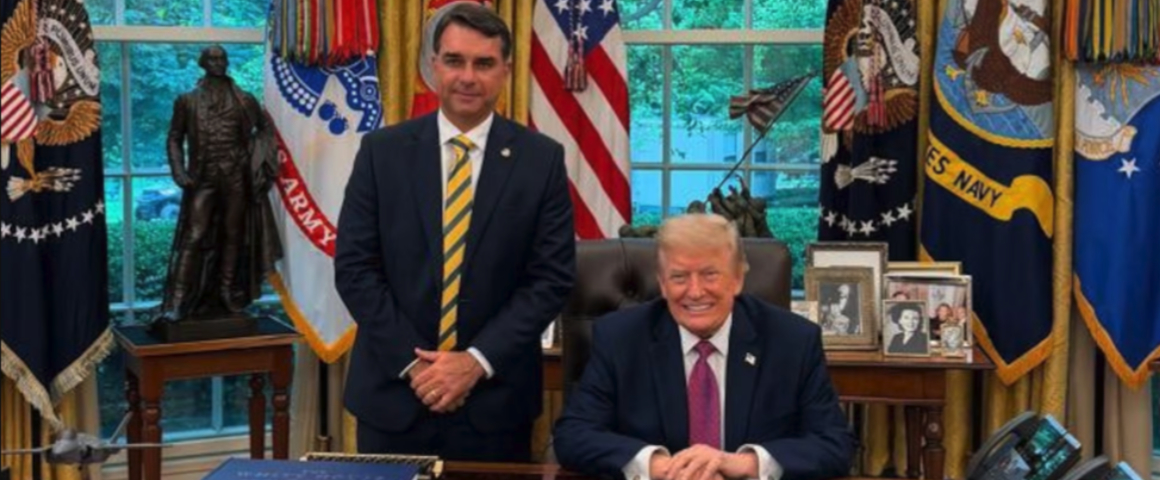
The first is the need to draw the connection between imperialist attacks on countries in the Global South, such as Venezuela and Cuba, with US President Donald Trump’s aggression towards Greenland and Canada. It was reasoned that a focus on the Western Hemisphere would fill in a gap in Vancouver’s current peace movement, while leaving open the possibility of supporting the work of other organization’s focused on imperialism in Africa and Asia.
The second point was to connect Canada’s lack of an independent foreign policy to ballooning military spending and the resulting austerity that is eroding the social wage and creating mass unemployment.
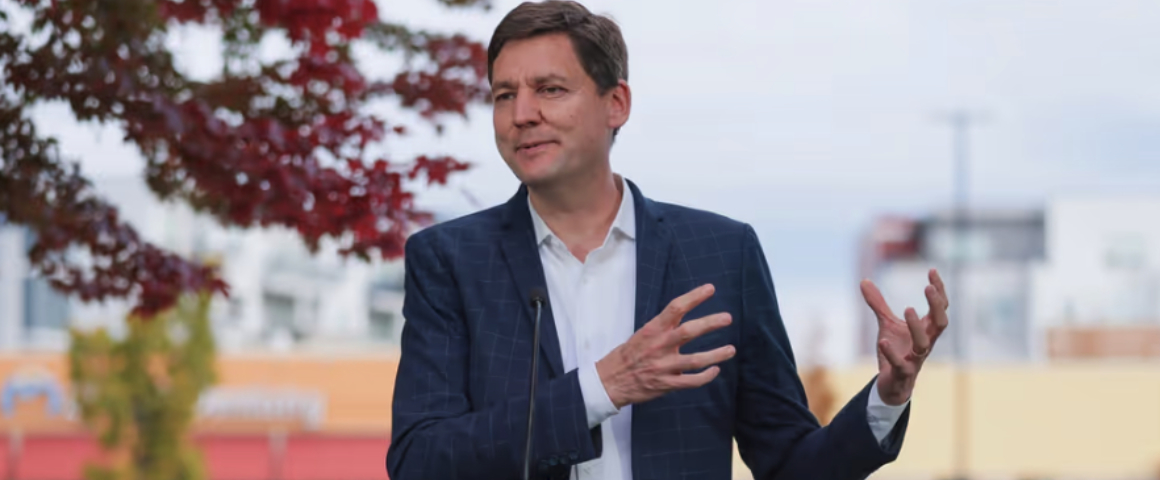
Third, the coalition is united around the need to emphasize the right of Indigenous peoples to self-determination. The Vancouver-based coalition was formed while BC Premier David Eby is openly attacking the Declaration on the Rights of Indigenous Peoples Act (DRIPA), framing it as a danger to private property rights in the province. Truthfully, it is an obstacle to his government’s extractivist policies meant to firmly situate BC into the supply chain of the military-industrial complex.
Finally, the coalition emphasizes migrant rights. Imperialist intervention across the Caribbean and Latin America is causing mass displacement, sending millions of working people across the continent in search of work to feed their families, leaving them vulnerable to extreme forms of capitalist exploitation.
Since forming, the coalition has organized a series of rallies and a screening of The Revolution Will Not Be Televised, a documentary about the 2002 failed coup attempt of then-Venezuelan President Hugo Chavez by US backed right-wing forces.
The March 19 People’s Forum for Peace was the first attempt by the coalition to hold an event focused on bringing activists and organizers from different areas into an open discussion on the importance of organized collective action.
The evening’s tone was established by a special pre-recorded message from Rodrigo Malmierca Díaz, Cuba’s ambassador to Canada. Malmierca underscored the dangerous situation Cuba currently faces due to the intensification of the blockade under the current Trump administration.
The complete blockade on oil amounts to nothing less than collective punishment of the entire population – a war crime and illegal under international law. Yet this did not begin just in January of this year: during Trump’s first term, over 200 new measures were added to the more than 65‑year‑old blockade, including the arbitrary and baseless designation of Cuba as a state sponsor of terrorism.
Malmierca emphasized the extraterritorial nature of the blockade, through which the United States, by financial and economic coercion, prevents other countries from trading with and normalizing relations with Cuba. He made it clear that these new measures will not destroy the revolution and that the Cuban people will continue to resist the terrorism of the United States. He reminded everyone that solidarity is now more important than ever.
Speakers from Canada Palestine Association, International Migrants Alliance, CoDevelopment Canada and Women’s International League for Peace and Freedom took the stage to share experiences from the front lines of their work. Topics ranged from Indigenous rights and migrant justice to the gendered impacts of austerity and the decades-long US embargo on Cuba.
Despite the breadth of topics, the evening circled back to a single idea: these struggles are not separate. With Canada’s military budget set to reach 5 percent of GDP ($150 billion) by 2035, speakers argued that the political establishment is making a choice. The question now is whether working people will organize to demand an alternative.
Speakers stressed the importance of forming coalitions to strengthen the peace movement in Vancouver and across Canada, arguing that collaboration is essential as working people face deepening crises in housing, healthcare, education and more.
With this country’s military spending set to soar over the next decade, the evening’s discussions made it clear that the true front lines of conflict are not overseas but at home, in our underfunded schools, precarious housing, and communities targeted by systemic violence. In a political climate that increasingly treats war as inevitable, we need to see more gatherings like this in Vancouver as we struggle for peace.
Support working-class media!
If you found this article useful, please consider donating to People’s Voice or purchasing a subscription so that you get every issue of Canada’s leading socialist publication delivered to your door or inbox!
For over 100 years, we have been 100% reader-supported, with no corporate or government funding.