
Commentary from Central Executive Committee, Communist Party of Canada
As more working people reject the corporate agenda advanced by Mark Carney and the Liberal Party, many are actively searching for a political vehicle to organize a fightback. This is partly reflected in the enthusiasm generated among the left wing of the New Democratic Party by Avi Lewis’ leadership victory.
This search for an alternative to austerity, militarism and corporate plunder is welcome but the NDP, even under new and more “left leaning” leadership, is no substitute for a genuinely militant and united fightback rooted in the working class and its independent political action.
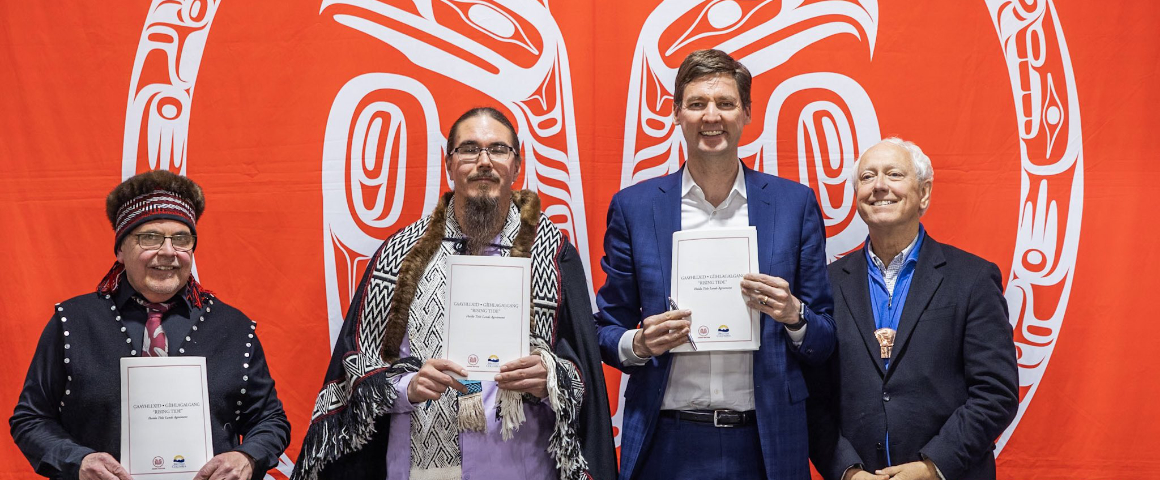
The immediate response from senior NDP figures to Lewis’s victory reveals the deep contradictions within that party. The NDP leaders in Alberta and Saskatchewan, and the Premier of British Columbia have launched open attacks on the new leader. Naheed Nenshi, who won the Alberta NDP leadership in 2024, has made clear his desire to serve the interests of the US-dominated oil and gas sector. In British Columbia, David Eby is pursuing a frontal assault on the public sector through mass layoffs, while rolling back Indigenous consultation rights for corporate extraction projects.
Lewis has downplayed these battles and welcomed “disagreement,” but the contradiction between the corporate agenda of provincial NDP governments and his own stated policies cannot be resolved by goodwill alone. This is a civil war between right-wing social democrats who have embraced neoliberalism and are openly content to manage capitalism with a human face, and “left” social democrats who believe the party should return to its roots with “bold” reforms. These conflicts reflect two sides of the same coin – social democracy, despite left or right slogans, remains rooted in the idea that capitalism can be reformed and that electoral struggle is the primary path forward. As such, the NDP remains, at best, an unreliable vehicle for leading a genuine fightback.
Beyond the personalities and barbs arising from this specific leadership race, a deeper phenomenon emerges: The NDP is attempting a tactical shift leftward precisely because its decades long strategy of trying to “out liberal” the Liberals has hit a dead end. That strategy has produced demoralization, declining working-class support, and the party’s worst electoral result in history in the April 2025 federal election. The recent defections to the Liberals of Nunavut MP Lori Idlout and former Ontario NDP deputy leader Doly Begum further demonstrate the failure of this approach.
Even before the confidence and supply agreement with the Trudeau government, the NDP repeatedly backed regressive Liberal policies, including the renegotiated USMCA and massive COVID corporate welfare that funneled tens of billions of public dollars into corporate monopolies. Then came the formal agreement which tied the NDP to the deeply unpopular Liberal government while most people’s living standards took a beating through inflationary attacks on wages. It is telling that Lewis and none of the other leadership candidates criticized the confidence agreement. A tactical shift leftward, while potentially attracting disillusioned activists back into the party, cannot solve the more fundamental crises of social democracy.
Beyond its internal contradictions, the NDP remains largely confined to English-speaking Canada, with no ties to Indigenous struggles for sovereignty and with no roots in Quebec. This latter point was illustrated superficially but tellingly by the fact that the French language NDP leadership debate was conducted mostly in English. Moreover, the NDP continues to support the Clarity Act which places conditions on Quebec sovereignty, and the Sherbrooke Declaration by the party’s Quebec section in 2005 further fails to recognize the right to national self-determination up to and including secession. The NDP is not reflective of the pan-Canada unity required for a genuine countrywide fightback against corporate rule.
As a social democratic party which views capitalism as fixable, the NDP also lacks a credible answer to the most urgent questions facing working people in Canada today. The current moment is one of escalating imperialist barbarism internationally, and at home it is characterized by rapid militarization, deep austerity and the continued erosion of sovereignty. On questions of trade and peace, the NDP has accommodated itself to the corporate paradigm for 40 years – it abandoned its criticisms of NAFTA and NATO, advocated for more military spending, and voted for Canada’s participation in the wars in Yugoslavia, Afghanistan and Libya. The present moment demands struggles against military spending, against NATO membership, and for withdrawal from the USMCA. Boldness in policy rings hollow as long as there are not clear answers to these immediate central questions.
Avi Lewis positions himself as a democratic socialist, but this is in a party that fully expunged the word “socialism” from its constitution in 2013. A simple and opportunistic return to using the word “socialist” does not mean the NDP is now a partner in fighting for socialism in Canada. Democratic socialism is a form of social democracy, and it continues to reject the need for a revolutionary political party of the working class, to negate the historical achievements of working people under real socialism, and to define the communist movement as undemocratic. The history of social democracy in Canada, especially since 1945, is intertwined with anti-communism and class collaboration. That fatal flaw cannot be rectified by new incarnations of social reformism.
Electing more left-wing candidates is important and can help advance the class struggle. But electing the NDP will not bring socialism; even electing the Communist Party, which would guarantee parliament had strong fighters for the working class, would not in itself win socialism. We need to move beyond a narrow focus on electoralism, and work to build working class political power through extra-parliamentary organizing that finds reflection in the parliamentary arena.
To the extent that the Lewis-led NDP participates in building the extra-parliamentary struggle, we should welcome it. But we must also be wary of attempts to co-opt labour and social movement energy into narrow partisan campaigns for the NDP. The trade union movement is not well served by automatic affiliation or permanent organizational ties to the NDP, or any other Party, including the Communist Party. Rather, the labour movement needs to take independent political action in mass extra parliamentary struggle, while giving support to particular electoral candidates, coalition programs or policies where appropriate.
The crises facing working people today demand much more than managerial reforms within capitalism. We are confronted by the drive towards world war, the rapid militarization of the Canadian state, new attacks on labour and democratic rights, and a deepening affordability crisis driven by corporate profiteering. The existential threat of climate change continues to accelerate as well as the threat of nuclear apocalypse. In this context, a genuine fightback requires a program that directly challenges the power of monopoly capital.
We must fight for Canadian withdrawal from NATO and the dismantling of Canada’s military subordination to the Pentagon. The $150 billion that Carney is set to divert to militarization each year must be redirected to social programs, housing, health and education. We must demand an end to the USMCA and its corporate protections, replacing it with multilateral, mutually beneficial trade relations. Public ownership over natural resources and the energy industry is the main pathway to combating climate change – only democratic public control of oil, gas, hydro and renewable energy can enable a planned, just transition that protects workers and communities while rapidly reducing emissions.
We must confront the massive assault on living standards. We need a public program that builds two million units of social housing, to help decommodify housing and address the housing crisis. We need to fight for sovereignty through a program that nationalizes key industries – banks and insurance, auto, steel, shipbuilding and aerospace – and puts them under democratic control to guarantee jobs and production for social needs.
Beyond these measures, we need a democratic anti-monopoly, anti-imperialist people’s coalition, with the working class at its core, that fights for a full employment economy funded by cutting the war budget and taxing the corporations and the rich. This coalition will necessarily involve many social democrats, perhaps including left NDP leaders. But the key task in this volatile and dangerous period is to bring an anti-monopoly, anti-imperialist program to the working class and build the movement capable of winning it. For this we need a stronger Communist Party – history has shown that the stronger the Communist Party, the stronger the fightback and the more militant the whole working-class movement.
As monopoly capital attacks the living standards of the working class, a broad cross section of the Canadian people are compelled to fight back. That fight cannot be led by a party that remains trapped within the logic of capitalism and entirely reliant on the electoral process. It must be built through struggle, in the streets and in the workplaces.
Support working-class media!
If you found this article useful, please consider donating to People’s Voice or purchasing a subscription so that you get every issue of Canada’s leading socialist publication delivered to your door or inbox!