PV Manitoba Bureau
In a resounding win for all Winnipeggers, the combined force of popular movements and labour, of community organizers and concerned citizens, has defeated a controversial anti-protest bylaw within days of its first draft being made public.
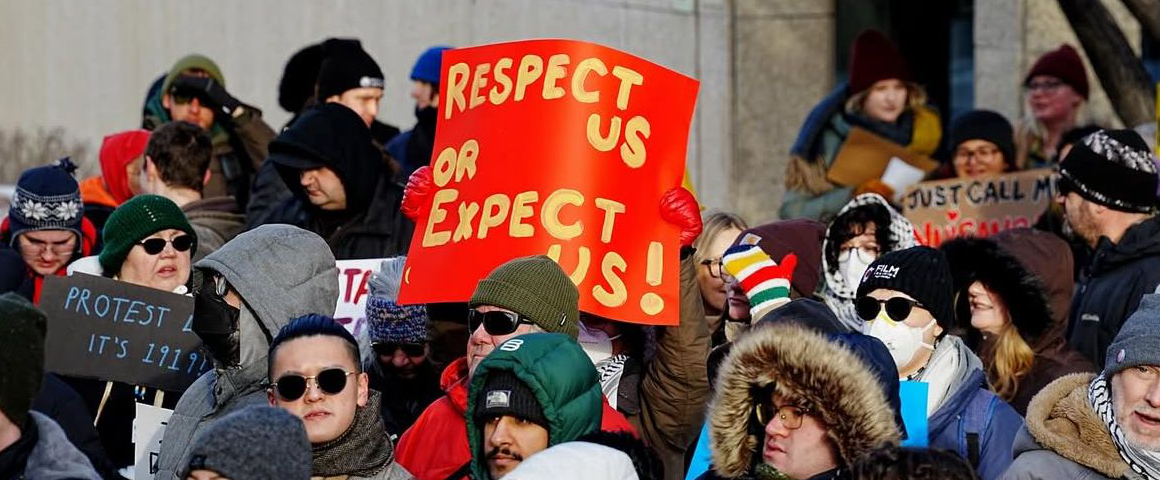
On the morning of February 17, City Council’s Executive Policy Committee (EPC) was greeted by a raucous demonstration against Councillor Evan Duncan’s “Safe Access to Vulnerable Infrastructure By-law” – a sweepingly undemocratic draft released only one week prior without any public consultation, education or explanatory material whatsoever. Inside the gallery, more than one hundred and twenty separate delegations spoke against this anti-democratic escalation. By the end of the day, the bylaw was scrapped.
Intending to “prohibit nuisance demonstrations and intimidation of persons at or in respect of vulnerable social infrastructure,” the bylaw proposed to create a one-hundred metre buffer around cemeteries, community and cultural centres, healthcare facilities, libraries, places of worship and all schools, with fines for violations ranging from $500 to $5000. This would place large swathes of Winnipeg – including all seats of government and constituency offices – off limits, essentially banning protest in more than a quarter of the city.
This attack on the Charter of Rights and Freedoms, including the right to freedom of expression and to peaceful assembly, doesn’t come out of the blue. Duncan’s failed draft borrows force from many such attempts at anti-protest legislation across the country, which have gained popularity against the backdrop of the Free Palestine movement and its massive mobilizations.
This isn’t the first attempt at criminalizing protest in Winnipeg’s recent history either. In 2021, Manitoba’s Conservative government attempted (and failed) to push through Bill 57, which was meant to protect “critical infrastructure” in the wake of the Indigenous-led #ShutDownCanada movement. These connections are well understood, and despite the pretense of concern for vulnerable persons, City Hall’s attack on democratic rights was instantly opposed as such by a chorus of Indigenous organizers, faith groups and labour councils.
In the face of this public outcry, Duncan visibly flailed and backtracked, withdrawing his support for the bylaw before the council vote had even begun. According to Duncan, the bylaw was never intended to ban protest but to protect “specified characteristics” of marginalized groups; but this was obviously not so. There are already laws against hate speech and violence on the books, and the proposed bylaw’s criteria for “intimidation” was hopelessly vague.
Duncan is a vocally provocative Zionist, and represents the very area of the city where Liberal MP Ben Carr had previously proposed “bubble zone” legislation to protect an appearance by Israeli Defence Force veterans who participated in the genocidal siege on Gaza. “In my opinion, they want a bylaw to keep Palestinians and their supporters off the streets of Winnipeg,” said Diane Zack, coordinator of the Manitoba-Cuba Solidarity Committee. Many other delegations, including the Canadian Palestine Association of Manitoba, agreed.
Not only would the proposed bylaw have limited protest against war and genocide, but its expansive language would have stifled political action by labour. Clearly Duncan and others on the EPC meant to cleave labour from the social movements by adding an exemption for “lawful activities related to or pursuant to a labour dispute or collective bargaining.” But the bylaw would nonetheless have impacted secondary pickets and solidarity actions by unions, and City Council ought to have expected a fight here too. “Labour is united on our stance against this proposed by-law,” said Melissa Dvorak, President of the Winnipeg Labour Council, in a February 16 release by community organizers.
The defeat of this anti-popular and legally dubious bylaw is a clear win and should be celebrated as such. But when we fight, the forces of repression fight back. Though the draft will not appear before council, a petulant Duncan spoke of a future, refined version of the bylaw; while Mayor Scott Gillingham and others looked forward to the passage of Federal Bill C-9, which proposes new criminal offences to “protect access to religious, cultural and other specified places.”
The Canadian Labour Congress has already denounced this attack, which threatens any number of legal job actions. According to the CLC, Bill C-9 “opens the door to the criminalization of peaceful protest and collective action … This is a direct attack on organized labour and freedom of association.” At every level of government, politicians are experimenting with sweeping anti-protest legislation – using the language of accessibility to assert the rights of private property over the civil liberties of working people.
In Winnipeg, however, such an attempt failed. A glaringly unconstitutional proposal from a reactionary council, put forth without consultation, was crushed by quick movement and progressive opposition. And while a large group of organizers enlisted a breadth of opinion against the bylaw, the lesson is clear: The people united hold all power, and we should carry the strength gained from this local victory into the next battle.
Support working-class media!
If you found this article useful, please consider donating to People’s Voice or purchasing a subscription so that you get every issue of Canada’s leading socialist publication delivered to your door or inbox!
For over 100 years, we have been 100% reader-supported, with no corporate or government funding.