By Jennifer Drinkwater
In 2021, single-person households became the most common type of household in Canada for the first time, surpassing couples with children. That year, 4.4 million people in Canada lived alone – representing 15 percent of all adults aged 15 and older in private households. This is up from 14 percent in 2016 and 13 percent in 2001. Since 1981, the number of one-person households has more than doubled.
Seniors represent a rapidly growing segment of people living alone. This is driven by an ageing population and the loss of a spouse, a trend that disproportionately affects women, who tend to outlive their partners. Furthermore, greater financial independence for women means marriage is less of an economic necessity. In 2021, 31.3 percent of women aged 65 and older lived alone.
However, single people often have a higher per-capita cost of living, as they can’t share fixed costs like rent or utilities. This can impact poverty rates, especially for single seniors. Single people often spend over half of their income on rent alone, leaving little for savings, retirement or emergencies. This makes them one missed paycheck away from a financial crisis.
The challenge is compounded by the gender wage gap. In Ontario, women working full-time still earn, on average, 87 cents for every dollar earned by a man. For racialized women, Indigenous women and women with disabilities, the gap is even wider. This means less disposable income for housing, right from the start.
Saving for a down payment to purchase a home is difficult on a single income, when most money goes to rent. In the housing market, single people compete against couples with dual incomes, while rents and home prices have far outpaced income growth. A one-bedroom apartment in many Ontario cities now requires an income well above the individual median. Consequently, even working women with relatively well-paying jobs are being squeezed out of the market.
The growth in single-person households increases demand for smaller dwellings, contributing to rising prices in urban centres. It also creates a greater need for community centres, social programs, and services that combat loneliness and social isolation, particularly among seniors.
Current tax policies particularly impact single women, because they are taxed as individuals but compete in an economy and society structured for dual-income households. The RSP withdrawal limit for a first-time Home Buyers’ Plan (HBP) is $35,000 per individual, and it has not been indexed to inflation. The Tax-Free Savings Account (TFSA) contribution room is $7,000 annually, so the cumulative limit for someone who has never contributed and was 18 or older in 2009 is $101,000 by the end of 2025. The First Home Savings Account (FHSA) allows an annual contribution limit of $8,000 with a lifetime limit of $40,000 per individual, and unused room can be carried forward. A couple can combine these: $70,000 (HBP) + $80,000 (FHSA) = $150,000 in tax-advantaged home-buying savings, plus $202,000 in combined TFSA room.
Moreover, couples, particularly those with one high earner and one low- or non-earner, can significantly reduce their overall tax burden through mechanisms like the Spousal Amount Tax Credit and, crucially, pension income splitting in retirement.
Single women cannot split their income with a lower-earning or non-earning spouse. They bear the full tax burden on their single income, which is often lower than the combined income of a dual-earner couple. In retirement, this is exacerbated as they cannot split pension or Registered Retirement Income Fund (RRIF) income, leaving them in a higher tax bracket.
The trends in Canada are not an accident – they are the direct result of a socio-economic system that privileges the coupled, nuclear family model while punishing those who exist outside of it. The data reveals that the nuclear family is a political institution that creates widespread inequality, isolation and financial precarity.
The higher cost of living for singles isn’t a personal failing – it’s a mathematical certainty in a system where fixed costs like rent and utilities are not shared. When a single person spends over half their income on rent, they are experiencing a predictable outcome of an economy that assumes everyone will partner up to survive.
As people live longer, the model of relying on a spouse or one’s children for care is collapsing. These seniors are left isolated, with their care needs unmet by the very family structure they were told would protect them. While marriage is no longer an economic necessity for women, the current structure of the economy makes it a significant advantage. This creates a pressure to partner not for love, but for financial survival and access to housing, essentially a modern form of economic dependency.
The rise of single-person households is not the problem; it is a symptom of people seeking freedom from an outdated institution. The problem is a society that clings to the nuclear family as the ideal, condemning a growing segment of its population to poverty, isolation and systemic disadvantage.
Housing is a right, not a privilege for those who can bid the most. It must be decommodified and guaranteed through public ownership and delivery that includes social housing, co-housing models and community land trusts. We need to replace the isolated, private household with robust public services, universal childcare, eldercare and healthcare. We need to create networks where care for one another is a communal responsibility, not a private burden falling on individual women in nuclear families. Implementing a guaranteed livable annual income to eliminate the poverty trap of single-person households is vital.
Recognizing the systemic disadvantage faced by single individuals, we need to update the tax system for greater equity. This includes changes to offset the financial benefits of cost-sharing, which is available to couples.
A distinct caregiver recognition tax credit could partially socialize a private burden, acknowledging that the current system offers no support to a single adult juggling work, their own household, and significant care duties. We need to address the profound retirement security gap faced by single individuals, particularly women, whose careers and savings are often impacted by unpaid caregiving.
A big part of the solution lies in updating the tax system for equity and funding a robust, socialized care system. This approach would help genuinely liberate women, allowing them to form relationships (or not) based on desire rather than economic necessity.
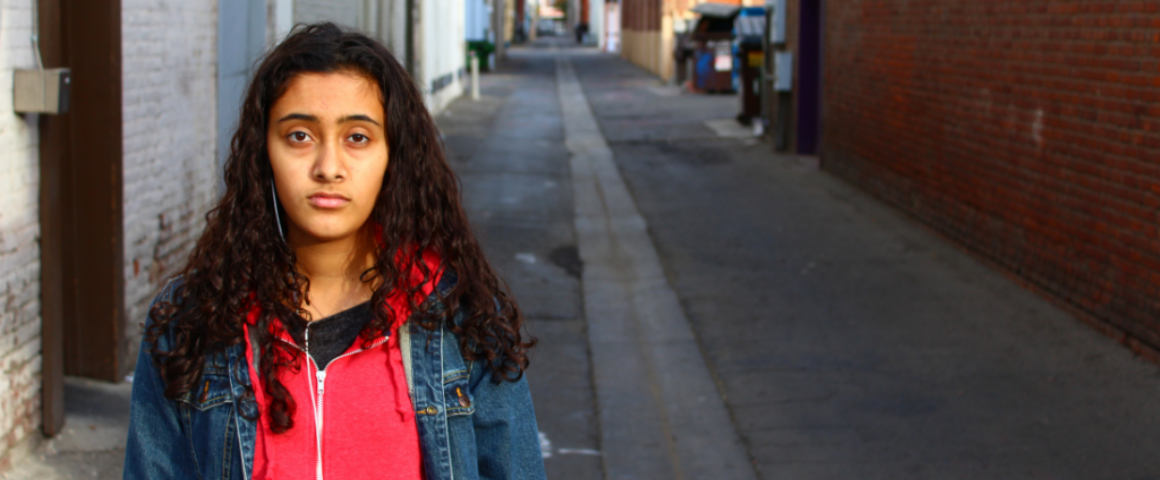
[Photo: Canadian Centre for Housing Rights]
Support working-class media!
If you found this article useful, please consider donating to People’s Voice or purchasing a subscription so that you get every issue of Canada’s leading socialist publication delivered to your door or inbox!
For over 100 years, we have been 100% reader-supported, with no corporate or government funding.