By Cymry Gomery
Trying to understand what military bases Canada has within its own borders, and what bases it maintains through its ill-conceived military integration with the US, is challenging.
A veritable alphabet soup of terms and acronyms presents a confusing and contradictory picture: we read about Canadian forces bases and stations, lily pads, operational support hubs, cooperative security locations, forward operating locations. And this being the military, these terms are often further obfuscated through a generous seasoning of acronyms like OSH, CSL, FOL and others.
The most important thing to understand is: These are all military bases.
Domestic bases
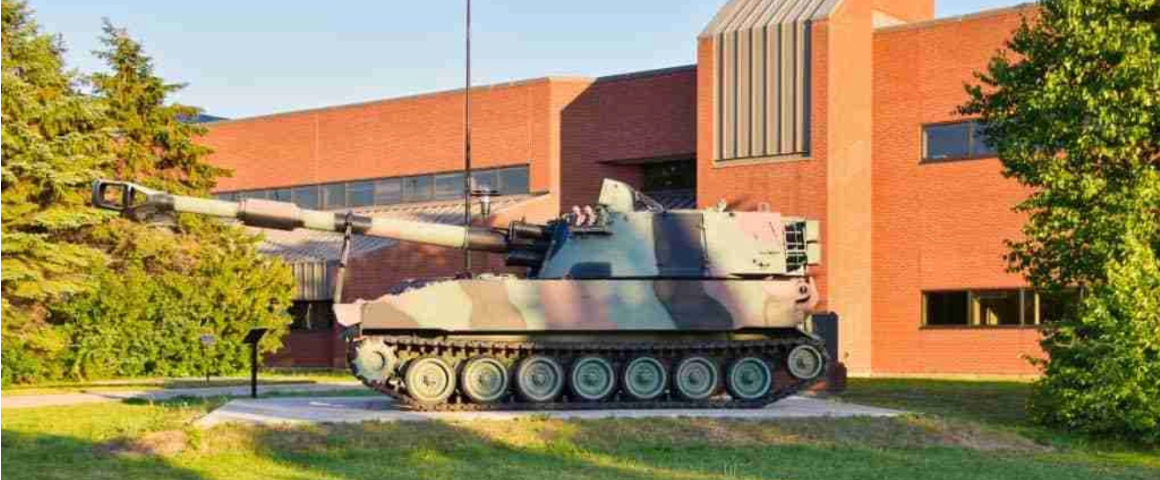
The Canadian Forces even breaks down its domestic bases into Canadian military “bases” – the larger facilities – and “stations” which function as detachments of other nearby bases.
According to Wikipedia, within Canada are currently 10 army bases, four navy bases and 12 Canadian air force bases. In addition, there are a plethora of “closed” bases that still function – unofficially – under the budget umbrella of the acknowledged bases. Examples are the CF Leadership and Recruit School at St. Jean, Quebec, now a lodger unit of CFB Montreal, and the former CFS Masset, now a detachment of CFS Leitrim. Other supposedly closed facilities, Wikipedia adds, are now used as training grounds for reserve or militia units.
Overseas bases, a.k.a. “Operational support hubs”
According to the government of Canada’s website, Operational Support Hubs (OSHs) are “Canadian Armed Forces (CAF) operations abroad… that exist through a series of pre-negotiated arrangements with partner nations to facilitate the movement of personnel, materiel, equipment and supplies in strategic locations around the world.”
The bullet list that follows this statement hastens to add that OSHs “are not military bases.” Except that the definition provided matches the dictionary definition of a military base, and calling it something else does not change that.
True to the military alphabet soup strategy, overseas bases located in the Caribbean, Latin America and Africa have a different name: Cooperative Security Locations (CSLs).
Canada has four overseas bases: OSH Europe, located in Germany, in operation since 2009 and staffed by Canadian air force (CAF) personnel; OSH Southwest Asia, located in Kuwait, established in 2011 during the US war in Afghanistan (2001 to 2021) and available to temporarily house CAF personnel; OSH Latin America and the Caribbean, located in Jamaica and created in June 2016; and OSH West Africa, located in Senegal and created in 2018.
Warning: Alphabet soup again! Overseas bases are nicknamed “lily pads” because they can serve as jumping-off points for larger-scale interventions.
NORAD bases, or “Forward operating locations”
The Shamrock Summit in Quebec City on March 18, 1985 resulted in the creation of four North American Aerospace Defence (NORAD) bases, known as forward operating locations or FOLs. These NORAD bases are in Yellowknife, Rankin Inlet, Iqaluit and Inuvik. The locations are maintained by the Canadian Department of National Defence. The stated purpose of these bases is “to defend the Northern Canadian frontier.”
However, we can see the NORAD bases not as a benevolent presence to protect Canadians from evil Russians (for example) but rather as a means for the United States to extend its own territory-by-proxy, and Canada’s implicit acceptance of, and pandering to, the US as the current global hegemon. Canadian taxpayers are forced to be complicit in the US depredations, since over the next twenty years, our government has promised $38.6 billion of our money to NORAD.
History shows that far from protecting Canadians, our NORAD commitment also means that Canadians in the military will have to risk their lives for US aggression. For example, Canadian NORAD personnel were put on high alert to support US troops during the Cuban Missile Crisis and during the 1973 Ramadan/Yom Kippur/Arab-Israeli War.
Furthermore, even though the Jean Chrétien government didn’t officially join the George W. Bush administration’s “coalition of the willing” in the 2003 US invasion of Iraq, Canadian troops nonetheless participated in the war. Dozens of Canadian soldiers were integrated in US units fighting in Iraq, Canadian fighter pilots participated in “training” missions in Iraq, three different Canadian generals oversaw tens of thousands of international troops there, and Canadian naval vessels led maritime interdiction efforts off the coast of Iraq.
US troops in Canada
While there are no American bases in Canada today, 156 active-duty members of the US military are deployed here, according to the Pentagon’s Defense Manpower Data Center.
The 156 US troops in Canada are just a tiny fraction of the US military’s global footprint, which numbers 165,830 active-duty members overseas, plus another 23,722 reservists and National Guard members. The thirteen states that border Canada, meanwhile, are home to 277,363 US soldiers, reservists and National Guard members combined, according to Pentagon data. The Canadian military’s total strength is less than a third of that, with approximately 63,000 regular members and 22,000 reservists.
Reasons for alarm
Why should we be concerned about the existence of Canadian bases domestically and overseas?
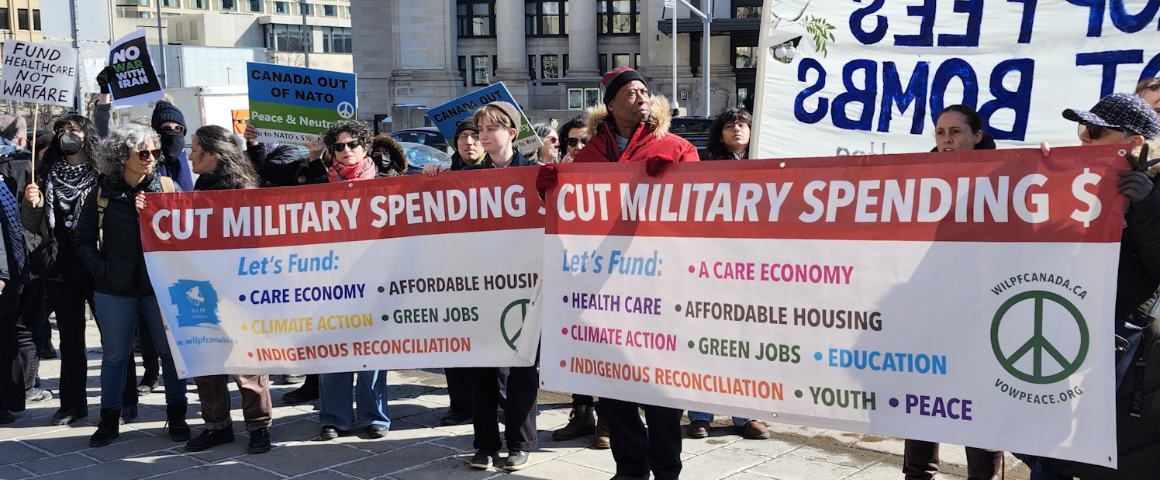
Consider this: these bases already cost us dearly financially, and also could cost us our health and even our lives. The financial cost comes from the fact that these bases will be established, operated and maintained with Canadian tax dollars, money that would otherwise have been available for social programs, health services, education, housing and other needs that directly benefit living people in Canada.
The bases will have a direct impact on the ecosystems into which they thrust themselves, killing untold numbers of animals, fish, insects and birds, and poisoning the land and water. They could cost the lives of the 85,000 Canadian troops and reservists who could be called on to serve in the event of a US-led or supported aggression.
Finally, increasing numbers of military bases, by their very existence, are a sign of a world that is becoming ever more violent under the boot of Western “civilization.” Every new base and every new dollar in military spending brings us closer to nuclear war and nuclear winter.
Cymry Gomery is coordinator of the Montreal chapter of World BEYOND War
Support working-class media!
If you found this article useful, please consider donating to People’s Voice or purchasing a subscription so that you get every issue of Canada’s leading socialist publication delivered to your door or inbox!
For over 100 years, we have been 100% reader-supported, with no corporate or government funding.