
By Dave McKee
During apartheid in South Africa, one of the key tools that solidarity movements around the world used was the campaign for divestment. The tactic became so effective that it is often singled out for its role in increasing pressure on the South African government to the point that it could not continue to enforce the apartheid system.
The divestment movement became particularly visible on university campuses during the 1980s, with students, workers and faculty members all organizing everything from leafleting to sit-ins and occupations in an effort to compel administrations to withdraw their endowment investments from South African firms.
But the movement extended far beyond universities. Faith communities, unions and professional associations, and many other social sectors all contributed to sustained and coordinated efforts to lobby businesses and institutional investors to divest. One of the most important targets for these campaigns was pension funds, especially public ones.
Divestment efforts had been ongoing for around two decades before they surged in the mid-1980s. Within just a few years of that rush, divestment from South Africa began to accelerate. In the United States, for example, the number of universities fully or partially divesting from South Africa increased from 53 in 1984 to 155 in 1988, just four years later. These included large and high-profile institutions like Michigan State, Columbia, Harvard and University of California. The latter withdrew some $3 billion, causing Nelson Mandela to remark on its significance to the anti-apartheid struggle.
One effect of the increase in divestment was significant and growing capital flight out of South Africa, which in the four years from 1985 and 1988 totalled around R 24 billion or about $10 billion USD. This, in turn, caused a currency decline and soaring inflation of about 15 percent annually.
But while divestment can be a tremendously powerful tool to weaken apartheid, it typically takes a long time for the campaign to get to that point.
Part of the difficulty is that many institutional investors – including charities, trusts and pension funds – have laws governing trustees’ fiduciary responsibility to their own investors. Put simply, people who run pensions and other funds can be sued by members or investors and charged under the law if they make financial decisions which reduce the funds’ returns. That includes decisions like divesting from apartheid regimes.
This creates a real roadblock for divestment campaigns – even if institutional investors are sympathetic, they feel a genuine restriction in their ability to act.
The anti-apartheid movement encountered this problem during the 1980s and early 1990s, and they confronted it by pressuring governments to pass legislation which forgave their fiduciary responsibility in the event of divestment.
One example was Ontario’s South African Trust Investments Act, which was enacted in 1990. That legislation applied to all trusts, registered charities and pension funds in the province, and deemed trustees not liable in the context of divestment from South Africa.
The specific wording of the law was, “Despite the Trustee Act or any other law, a trustee who acts in accordance with this Act and in a reasonably prudent manner does not commit a breach of statutory or other legal duty by (a) disposing of a South African investment even if the value of the property for which the trustee is responsible decreases or fails to increase sufficiently as a result; or (b) refusing to acquire a South African investment.”
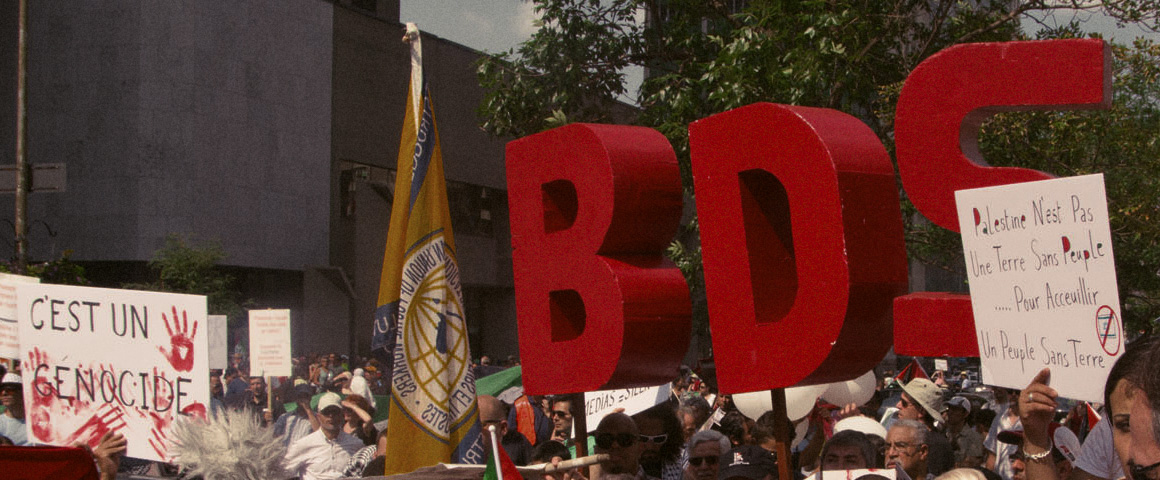
As the campaign for divestment from Israel gathers momentum, we need to think about pressuring governments for similar legislation now.
Support working-class media!
If you found this article useful, please consider donating to People’s Voice or purchasing a subscription so that you get every issue of Canada’s leading socialist publication delivered to your door or inbox!
For over 100 years, we have been 100% reader-supported, with no corporate or government funding.