[Link to Hiroshima-Nagasaki Day events at end of article]
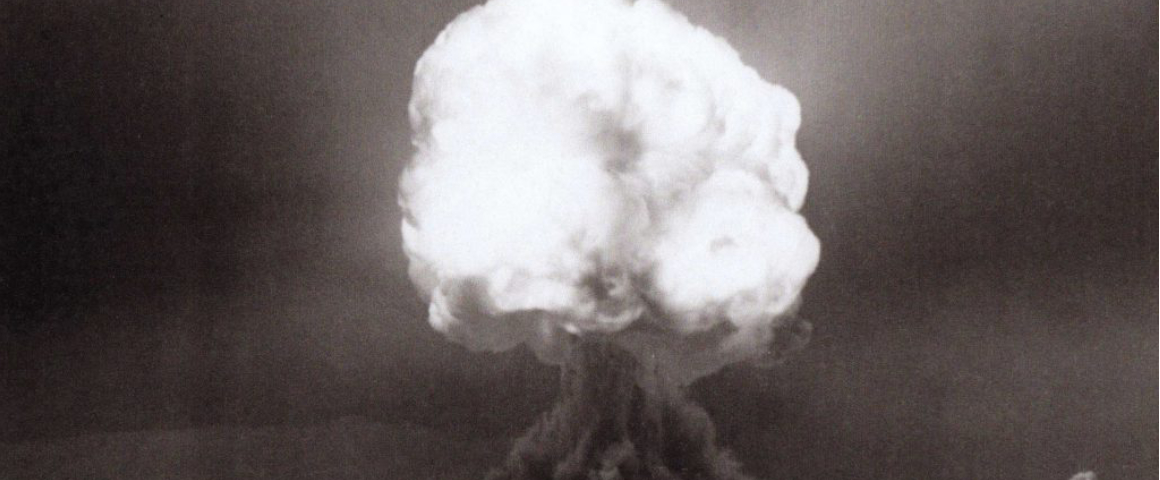
The events in New Mexico 80 years ago are often neglected. Before the bombs were dropped on Hiroshima and Nagasaki, the United States bombed their own people.
Trinity was the codename for the first ever use of a nuclear weapon. The plutonium bomb exploded at Alamogordo bombing range (later renamed White Sands Proving Ground) in New Mexico on July 16, 1945 was the same design as the one used a few weeks later against Nagasaki, which led to the deaths of at least 70,000 people. The bomb used to kill 140,000 people at Hiroshima was a uranium bomb.
The bombing in New Mexico was labelled a test, but this doesn’t convey the destructive power and the harm the nuclear explosion unleashed on the people living in the vicinity – it was not an unpopulated region as often claimed and as portrayed in the 2023 film Oppenheimer – and the environment. Fallout from the explosion reached 46 states throughout the US and spread to Canada and Mexico.
In spite of expert medical advice, the government made no effort to evacuate people either before or after the explosion and some people even played in the white flakes that came floating down on them. People living in Tularosa 40 miles (64 kilometers) away were thrown out of their beds by the blast and ash fell for days which “got on everything, went everywhere, the soil, the water, … everything they were eating or drinking in 1945 after the test was contaminated, but they didn’t know it,” says Tina Cordova whose father was a child at the time but suffered a lifetime of cancers and died of the disease aged 71.
The problems that began in New Mexico set off a chain of events that led to 2000 so-called test explosions all over the world over the following decades. Communities exposed to radiation and having their land, air and water contaminated, causing intergenerational harm.
Recognition and restitution
The recent extension of the Radiation Exposure Compensation Act (RECA) to more people and the increase in compensation is a welcome step, but, unfortunately, it doesn’t go far enough. Campaigners were looking for it to be extended to cover all of Nevada, Arizona, Montana, Guam and other places impacted by nuclear weapons testing.
The communities affected by nuclear test explosions all over the world, including in the US, have organized themselves and pushed for governments to provide healthcare, support and compensation for people they have harmed. These communities are also at the forefront of global efforts to abolish nuclear weapons through the Treaty on the Prohibition of Nuclear Weapons (TPNW) that is the only treaty to mandate support for people harmed by nuclear weapons and the cleanup of contaminated environments.
Never again
Since the first use in New Mexico, nuclear-armed states have harmed countless people by exploding nuclear weapons to test them. Every country that has nuclear weapons bombed people it had a duty of care for through their testing programs. The communities selected for these explosions were usually either colonized or Indigenous peoples and were given no choice.
Governments that have nuclear weapons don’t care about the impact of those weapons on people, some of them even try to stop scientific research into how nuclear weapons harm people and the environment. If they cared about their people, they would not just support such research, they would eliminate their nuclear arsenals.
Melissa Parke, Executive Director of the International Campaign to Abolish Nuclear Weapons (ICAN), notes of the New Mexico bombing: “This was not an empty desert, as some claim, it was home to Indigenous Peoples and other local communities made up of families, children, workers and farmers. There was plant and animal life and sacred sites. What we commemorate here was not some historical event of 80 years ago with little relevance to today. The Trinity explosion was only the beginning of the nuclear weapons story, and we’re honoured to join together with everyone to write its ending.”
Memory from Hiroshima survivor Setsuko Thurlow
“I was just 13 years old when the United States dropped the first atomic bomb, on my city Hiroshima. I still vividly remember that morning. At 8:15, I saw a blinding bluish-white flash from the window. I remember having the sensation of floating in the air. As I regained consciousness in the silence and darkness, I found myself pinned by the collapsed building. I began to hear my classmates’ faint cries: “Mother, help me. God, help me.” Then, suddenly, I felt hands touching my left shoulder and heard a man saying: ‘Don’t give up! Keep pushing! I am trying to free you. See the light coming through that opening? Crawl towards it as quickly as you can.’
“As I crawled out, the ruins were on fire. Most of my classmates in that building were burned to death alive. I saw all around me utter, unimaginable devastation. Processions of ghostly figures shuffled by. Grotesquely wounded people, they were bleeding, burnt, blackened and swollen. Parts of their bodies were missing. Flesh and skin hung from their bones. Some with their eyeballs hanging in their hands. Some with their bellies burst open, their intestines hanging out. The foul stench of burnt human flesh filled the air. Thus, with one bomb my beloved city was obliterated.”
Republished from ICANW.org
[People’s Voice encourages readers to participate in Hiroshima-Nagasaki Day events. Please click here for a cross-Canada listing.]
Support working-class media!
If you found this article useful, please consider donating to People’s Voice or purchasing a subscription so that you get every issue of Canada’s leading socialist publication delivered to your door or inbox!