By Silla Tauler
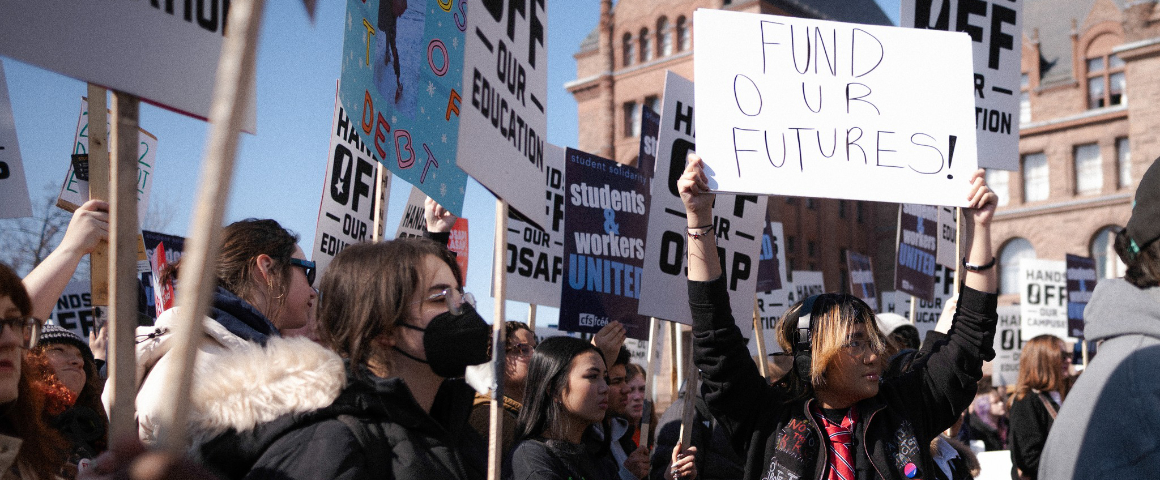
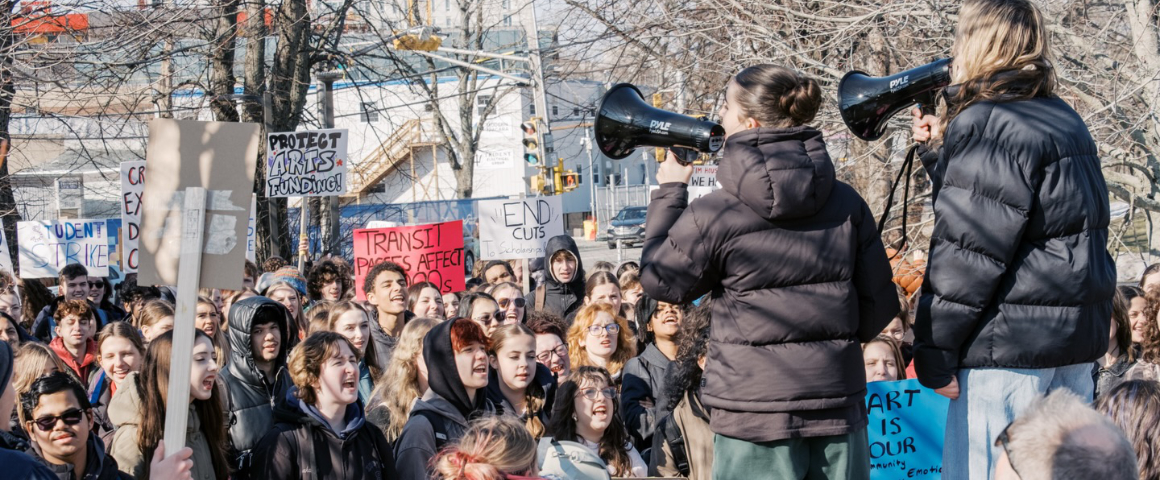
During the recent provincial election campaign in Ontario, education workers’ unions tried (largely in vain) to highlight ways that chronic underfunding of schools is beginning to have serious consequences in terms of the quality of education schools can provide.
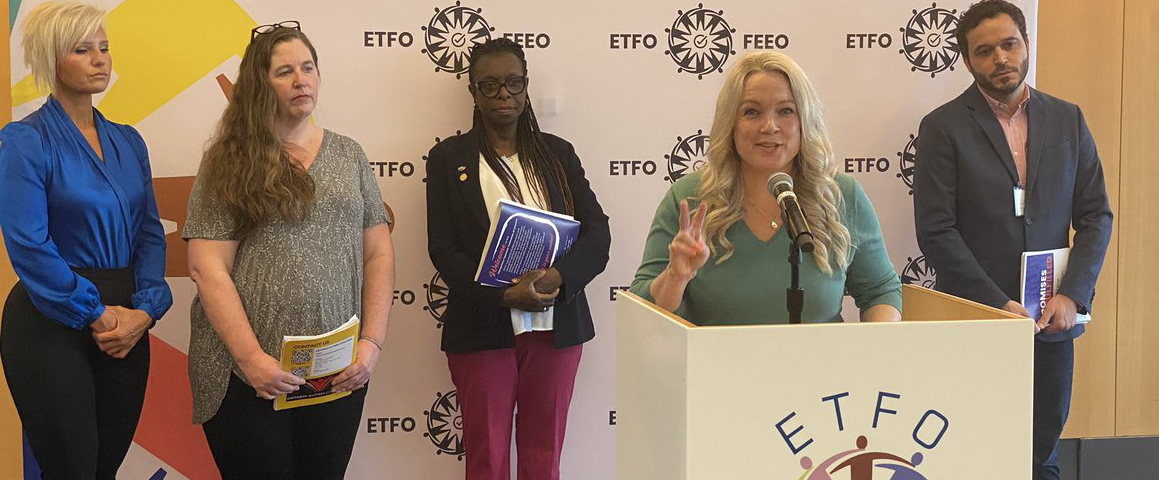
A subtext, that became text, was that funding cuts have started to deteriorate the state of schools to the point that it is impacting education workers’ ability to remain safe while at work. Recently, the Elementary Teachers’ Federation of Ontario (ETFO) published a report on the state of special education funding and positioned it as a crisis of unfulfilled promises in the classroom with profound negative effects on students’ learning and workers’ working environments. As a technical note, some scholars have argued that special education is a discriminatory (ableist) term. But it is the legally defined, technical term in Ontario’s education system to define methods of funding programming for students with disabilities in schools and is being used here for technical clarity’s sake.
ETFO has been doing excellent work lately making accessible to the general public to visualize the cost of recent (post-2018) cuts to funding for public schools (see their Building Better Schools map online at etfo.ca).
Now they have targeted special education funding particularly because the funding for these students often comes from dedicated, supplementary funding pools and is meant to meet the myriad complex needs that students are presenting with in schools (e.g., mental health concerns, psychoeducational accommodations, etc.). Cuts to this funding specifically targets some of the most vulnerable students in our schools, and especially where it intersects with lower-waged workers or the un(der)employed these funding cuts can entirely bar a student’s progress through school (e.g., if funding gets cut for psychoeducational testing students can often be overlooked for additional supports which can make educational attainment difficult to impossible).
Under the rights-based framework that Ontario pays lip service to, these students are legally entitled to additional funding to provide the means for them to access education. This funding is meant to provide students with staffing levels and material support to help them succeed at school.
Some of what the ETFO report highlights is the inadequacy of the current funding model. The time horizon of the report’s critical examination of changes to the funding model for education, including special education funding, is since the 2018 election of the current Premier of Ontario, Doug Ford. The report makes certain specific claims about the changes that have been made since his arrival including: a lack of transparency about per school board funding for elementary school class size averages, an overall funding cut from the general funding of education by around $1500 per student per year (adjusted for inflation since 2018), and accompanying funding cuts specifically to the special education portfolio.
Importantly, this report makes the link to these cuts and increased complexity of education workers’ jobs alongside a worrying trend towards increased violence by students towards each other and towards education workers in schools.
The stated connection here is that students with intense, complex needs who are failed by a system to meet their basic emotional, social, linguistic or other needs will act out in sometimes violent ways. This has damaging effects on the entire school community and can create a host of additional downstream consequences for the staff and students in a school.
Eventually, these students end up in high schools where the complexities of their social and educational needs become further intensified. As they become older, they enter into the proverbial school-to-prison pipeline as their age and the nature of their outbursts gains the attention of local police forces. Staff who are the victims of this violence are often met by a system with conflicted administrative goals, feeling violated while at work, and this is likely a significant contributor to the overall education worker shortage common across Ontario.
According to Government of Canada data, the education subsector (in 2023) had nearly double the rate of temporary employment than the rest of the province. These temporary employees are the educational assistants (EA), child and youth workers (CYW) and others who are laid off by their employers over school holidays and summer vacation. Additionally, their pay is significantly reduced and the staffing levels are such that currently a single assistant may be asked to sub in and do the work that 2 to 3 others would have done previously.
They are also the staff who most often are called upon to intervene when a student is undergoing a crisis episode at school and tend to most often be the victims of workplace violence in schools.
This lack of funding and its link to violent student outbursts is something that is of common concern between both of Ontario’s English secular teacher’s unions. The Ontario Secondary School Teachers’ Federation (OSSTF) is a union that represents a combination of education workers that includes public secondary school teachers, EAs, school psychologists, CYWs and others across the province’s various regions.
The OSSTF took the opportunity to highlight this situation in the most recent provincial election. A section of their independent platform for education was specifically targeted at a need for an organized plan to address the health and safety concerns of education workers with a dedicated education sector regulation in the Occupational Health and Safety Act of Ontario.
Their platform links the education funding issues to numerous related health and safety concerns. These include: violence, physical danger from the lack of upkeep and maintenance at certain school buildings, and a lack of funding to maintain staffing levels to adequately meet students’ needs.
The proposed regulation, in its simplified form, would compel school boards in Ontario to collaborate with their education worker unions on their Joint Health and Safety Committees to come up with a workplace violence prevention plan and program.
[Photo: ETFO]
Support working-class media!
If you found this article useful, please consider donating to People’s Voice or purchasing a subscription so that you get every issue of Canada’s leading socialist publication delivered to your door or inbox!
For over 100 years, we have been 100% reader-supported, with no corporate or government funding.