By Elizabeth Naranjo
Under the guise of ensuring maritime security and law enforcement, the US Federal Register announced the imposition of new conditions for the entry of vessels from Cuba, effective April 2.
“These stem from a US Congressional law authorizing defense spending in 2024, which included an amendment by anti-Cuban legislators Carlos Giménez and María Elvira Salazar, approved without debate and through deceptive methods,” said Rodney González Maestrey, director of Legal Affairs and Analysis at the Cuban Foreign Ministry’s US General Directorate.
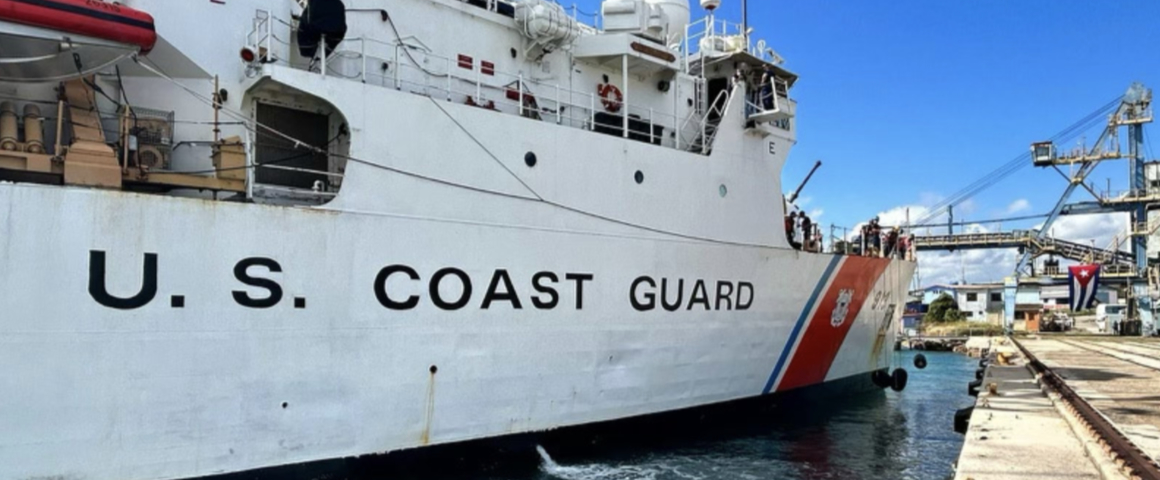
Under the Maritime Transportation Security Act and the Department of Homeland Security (DHS), as well as Title 46 of the US Code, Section 70108, as amended, and the island’s inclusion on the infamous list of state sponsors of terrorism, the Department of Homeland Security, under which the Coast Guard operates, must assume that ports in countries like Cuba do not comply with effective counterterrorism measures.
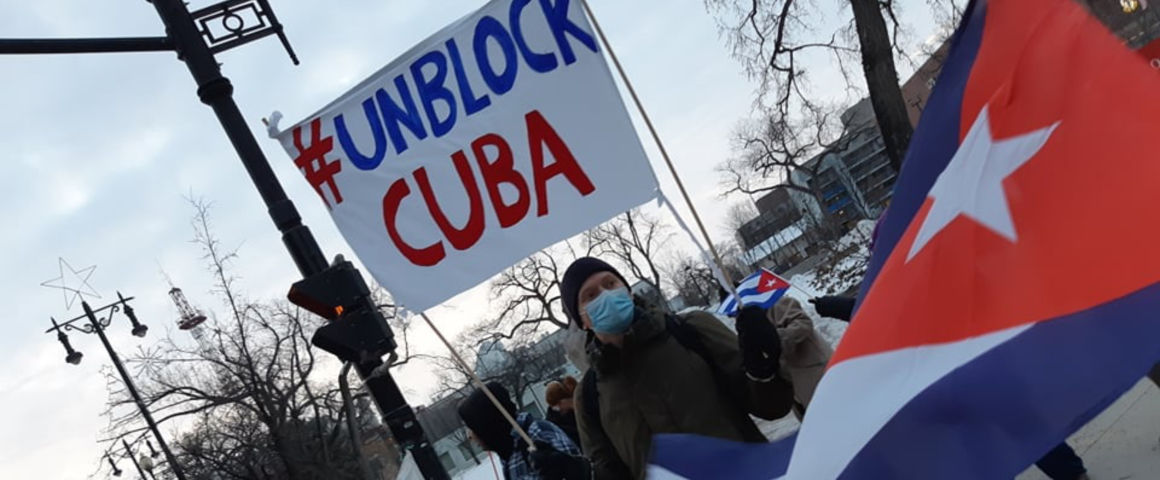
But the real objective of the new maneuver is to damage official cooperation between Cuba and the US on matters of national security between both countries. It also expands the extraterritorial nature of the blockade by attempting to deter US and foreign maritime vessel operators from engaging with the island.
The already complex interaction is further complicated because, while states have the sovereign right to regulate access to their territorial waters, intensifying these restrictions reveals an insistence by the US government on promoting the false idea that Cuba is a threat to US security.
Bilateral cooperation in maritime security was formalized between 2015 and 2016, with the Department of Homeland Security as the key agency implementing the relationship. Since then, the Coast Guard has maintained fluid and effective ties with the Cuban Border Guard Troops, especially in combating illicit trafficking of migrants and drugs.
Cuba has also been a partner in US national security, said González Maestrey, pointing to areas of joint work such as combating terrorism, human trafficking, port and airport security, and the flow of people and goods between the two countries.
Granma
Support working-class media!
If you found this article useful, please consider donating to People’s Voice or purchasing a subscription so that you get every issue of Canada’s leading socialist publication delivered to your door or inbox!
For over 100 years, we have been 100% reader-supported, with no corporate or government funding.