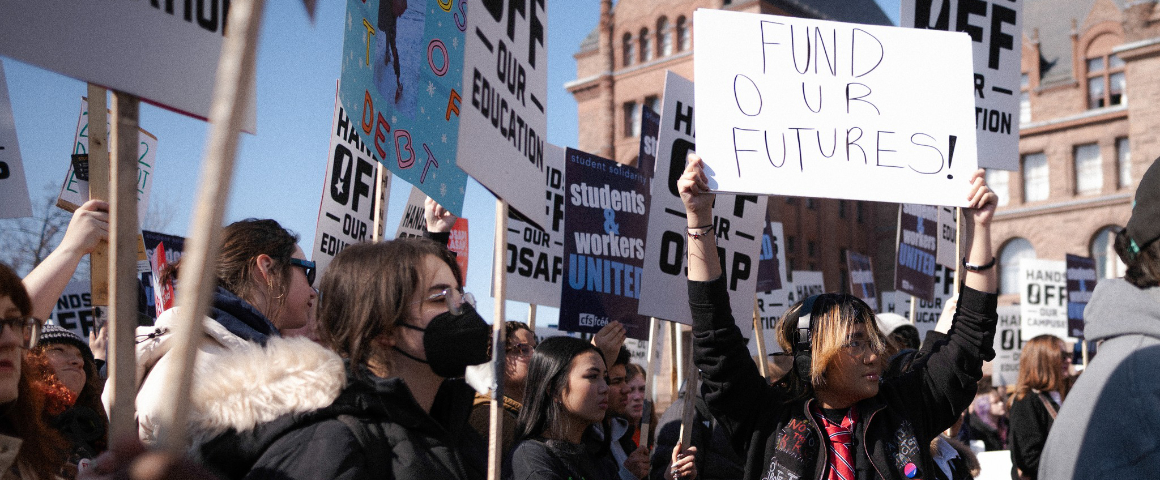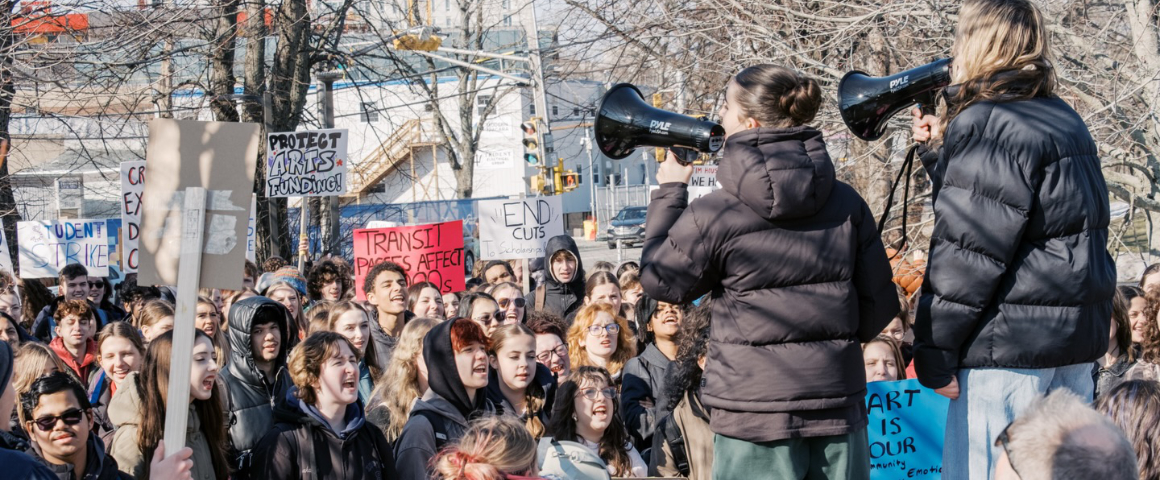
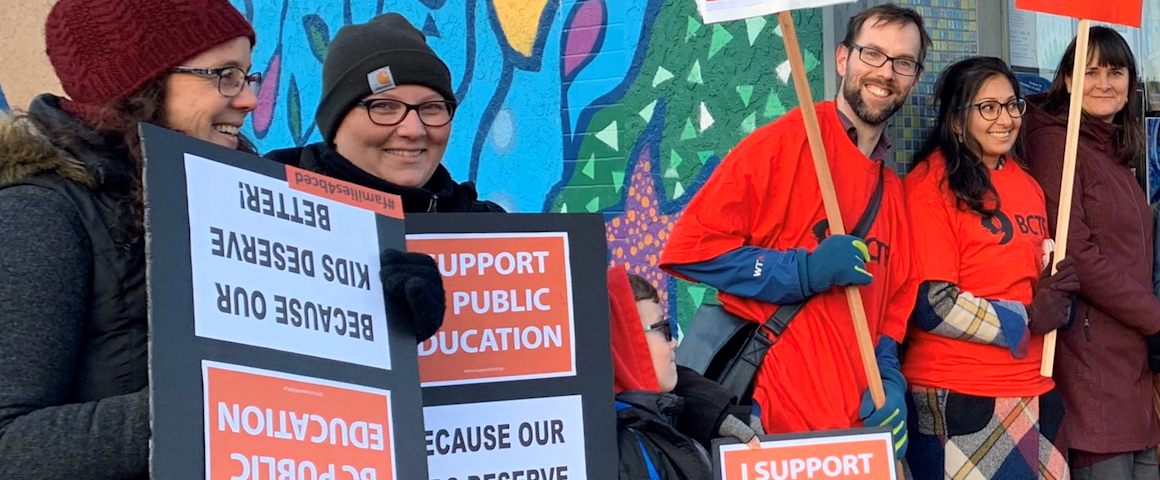
The annual meeting of the BC Teachers Federation takes place March 15-18 in Vancouver. This gathering of the historic organization representing over 51,000 teachers – two-thirds of all those with teaching certificates in BC – is an important reminder that universal public education is a core value of our society. Teachers and education staff perform an essential service in all countries – for students and their families, and for everyone who benefits from a well-educated workforce in all areas of the economy and public life.
But increasingly, on a global scale, education cutbacks and deteriorating teaching and learning conditions are becoming the norm, not the exception. Schools, teachers and students face sharper challenges as a result of declining public investments, climate change, privatization of social programs, and reactionary attacks on the values of democracy, accessibility and inclusion.
Appallingly, Canada provides strong support to the Israeli government, which has destroyed dozens of schools and killed thousands of teachers and students during its war against the Palestinian people.
Every day, we hear organizations like the Fraser Institute claim that public education is “too expensive” or “a waste of taxpayer dollars.” And yet, on a global scale, governments now pour almost $2 trillion per year into the military and armaments. The Trump regime in the United States is demanding that Canada spend a staggering five percent of Gross Domestic Product on the military – $125 billion per year (about $8000 annually for a family of four!) – far more than Canada currently spends on the public school system.
What about other examples? In 2023 alone, governments in Canada provided at least $18.5 billion in financial support to fossil fuel and petrochemical companies. Total corporate profits in Canada now regularly top $600 billion per year.
Compare those numbers to supposedly “unaffordable” spending on public education – $85 billion across the country during the 2021-22 school year. In British Columbia, the province allocates about $9 billion per year to K-12 school system. Shockingly, BC’s operating subsidies to the private school system are now over $500 million, with this spending growing far faster than funding for public K-12 education.
Clearly, this society has more than enough wealth to adequately fund and improve the public school system. But even in a province like British Columbia, where the current government was elected with strong support from public education supporters, the school system faces huge challenges and shortfalls.
While British Columbians are right to be proud of the quality of education in our public schools, the fact is that our most vulnerable populations – low-income students, those from Indigenous and racialized communities, those with special needs – continue to face inadequate supports and unique difficulties.
There are also problems with the overall system of governance in British Columbia schools.
Fortunately, the BCTF succeeded in its heroic struggle to defeat the former Liberal government’s arbitrary ripping up of collective bargaining agreements. But teachers here still face a combination of high costs of living and lower pay rates than other provinces.
The NDP government continues to side with advocates for “cops in schools”, even firing the School District 61 (Victoria region) school trustees for eliminating the School Liaison Officer program despite strong objections from teachers and students. Plans for seismic upgrades of aging school buildings remain far behind schedule. The NDP government’s failure to end the massive taxpayer subsidies for private schools is a major reason for BC’s underfunding of education.
These problems have become even more urgent as Canada faces the fallout of Trump’s tariff war and the crisis of the global capitalist economy.
The longstanding problem of teacher shortages and recruitment challenges were exacerbated by the pandemic, and by the reality that BC has among the lowest starting salaries for teachers in the country, about eight thousand dollars lower than in Alberta.
BC’s educators have accomplished a remarkable amount under these circumstances, but as the BC Institute for Public Education warns, “there is an urgent need to reinvest in our public schools now and fix the broken provincial funding formula, especially as it relates to special educational needs. Few things are more important to a society’s long-term success than a strong and inclusive public education system.”
The BC Committee of the Communist Party sends warm greetings to BCTF delegates, and wishes every success for your deliberations. The future of public education depends on the ability of teachers, students, families and supporters to organize and mobilize for fundamental change, to end the global waste of militarism and to push back against the neoliberal dogmas that put the greed of corporations ahead of the needs of working people and the environment.
Commentary by the BC Provincial Executive Committee, Communist Party of Canada
Support working-class media!
If you found this article useful, please consider donating to People’s Voice or purchasing a subscription so that you get every issue of Canada’s leading socialist publication delivered to your door or inbox!
For over 100 years, we have been 100% reader-supported, with no corporate or government funding.